

Car Forum World is reader-supported: some links on this page are affiliate links, and as an Amazon Associate Car Forum World earns from qualifying purchases at no extra cost to you. Learn more.
A wheel simulator kit is a set of decorative covers that mimic the appearance of high-end wheels on a vehicle’s existing rims. You need a simulator kit when you want to change the aesthetic of a truck or trailer without the cost of new wheels. You must measure your current wheel diameter and lug count before ordering to ensure the simulator fits your specific wheel size.
Wheel simulator kits provide a custom look without the cost of forged wheels
The primary problem these kits solve is the high cost of high-performance wheels. Forged aluminum wheels are the structural standard that simulators mimic for aesthetic purposes, but they often cost thousands of dollars per pair. A simulator kit allows a vehicle to adopt a specific look—such as a polished finish or a particular spoke design—while retaining the original, functional wheel. This is particularly useful for fleet owners or hobbyists who want a customized look without compromising the mechanical integrity of the original equipment.
If you prefer a high-shine finish, view our comparison of polished stainless steel wheel simulator kits.
How a wheel simulator kit works
The mechanism of a wheel simulator kit relies on a physical overlay that sits between the wheel rim and the tire. It functions through a series of mechanical steps that ensure it stays in place during vehicle operation:
Drivers needing a smaller profile should see our guide to the best 16 inch wheel simulator kit.
- The simulator is positioned over the existing wheel, aligning with the bolt holes of the rim.
- The mounting hardware secures the simulator to the hub or the rim face.
- The tire is seated against the outer edge of the simulator, which acts as the new visible face of the wheel.
- The hub cap covers the center, hiding the mounting hardware and providing a finished look.
Wheel Simulator Kits we have reviewed in detail
Prices across these 3 run from $218.17 to $249.99; each one has a full review here.
For heavy-duty applications, explore the top-rated 19.5 inch wheel simulator kit options.


Parts and standards that matter for wheel simulator kits
Several specific components and standards determine whether a wheel simulator kit will fit and remain secure on your vehicle. Understanding these terms helps you avoid a bolt pattern mismatch, which occurs when the simulator will not physically seat on the hub due to incorrect hole spacing.
The role of the hub cap and mounting stud
The mounting stud provides the physical connection point for the simulator, acting as the anchor for the entire assembly. It ensures that the simulator does not move independently of the wheel hub. The hub cap covers the center of the simulator for a finished look, hiding the studs and any remaining gaps. If a hub cap is missing, the center of the wheel looks unfinished and may expose the mounting hardware to debris.
Narrow down your options by viewing the best wheel simulator kit for Isuzu NPR W4.
The purpose of the retention clip
A retention clip secures snap-on simulators to the wheel hub. This component is vital for simulators that do not use a traditional bolt-through method. The clip provides a mechanical lock that prevents the simulator from rotating or vibrating loose during high-speed travel. Without a secure clip, the simulator may shift, potentially interfering with the tire’s seating.
For those running these specific vans, see our top picks for Ford E350 E450 simulators.
Choosing between 8-Lug and 10-Lug systems
Selecting between 8-Lug and 10-Lug systems determines compatibility with heavy-duty vs commercial chassis. An 8-lug configuration is standard for many heavy-duty trucks, while a 10-lug configuration is common on commercial trailers and larger vocational vehicles. If you select a kit designed for 8 lugs on a 10-lug hub, the simulator will not align with the mounting points. You must confirm your vehicle’s stud count before purchasing a kit.
Learn more about aesthetics by viewing our guide to choosing a finish type.
Snap-on vs Bolt-on installation methods
Choosing between snap-on vs bolt-on methods defines the installation method and security of the simulator. A bolt-on simulator uses the existing studs to clamp the simulator directly to the rim, providing a very rigid connection. A snap-on simulator uses a retention clip to lock onto the hub. Snap-on versions are often faster to install, while bolt-on versions are generally preferred for applications where maximum security is required to prevent any movement of the face plate.
Ensure a proper fit by viewing how to choose a lug count.
What having a wheel simulator kit changes in practice
A wheel simulator kit changes the visual profile of a vehicle without altering its weight or balance. Because the simulator is a shell, it does not change the wheel’s diameter, which is the total distance across the wheel from edge to edge. It also does not change the lug count, which measures the total number of threaded points for mounting. This means the vehicle’s handling and load capacity remain identical to the original setup.
Aesthetic benefits of simulators do not improve mechanical performance or grip
In practice, the difference shows up in the aesthetic of the vehicle. A chrome-plated steel finish is the high-end finish benchmark for durability and reflectivity, and a simulator can provide this look to a standard steel wheel. This is useful for owner-operators who want a “show” look for a “work” vehicle. However, the difference does not show up in the mechanical performance. The simulator does not provide extra grip, and it does not change the brake clearance. Because the simulator sits outside the rim, you must ensure there is enough diameter clearance so the simulator will not rub against the fender or brake components.
Understand the different styles available in the various types of wheel simulator kits.
High quality materials prevent wheel simulator corrosion and pitting
A common point of failure involves material corrosion. Low-grade steel will rust and pit, ruining the visual effect over time. If you choose a simulator with a lower-quality finish, the visual benefit may disappear within months of exposure to road salt or moisture. Therefore, the material of the simulator is as important as the design for long-term results.
Get a detailed look at the full review of the CHDT66 KWA-K64S.
Who needs a wheel simulator kit?
You need a wheel simulator kit if you own a heavy-duty truck or a commercial trailer and want a custom look without the expense of new wheels. This is a practical solution for fleet owners who want a uniform appearance across multiple vehicles without the high cost of forged aluminum wheels. If you are looking to change the look of a personal vehicle, a simulator kit provides a way to achieve a premium aesthetic on a budget.
Review the technical specifications in our full review of the Phoenix USA GD816.
Wheel simulator kits cannot improve load capacity or change bolt patterns
You do not need a wheel simulator kit if your primary goal is to improve vehicle performance, increase load capacity, or change the actual wheel size. Because the simulator does not change the rim’s structural properties, it cannot improve the mechanical capabilities of the truck. If you need to change your bolt pattern or move to a larger wheel diameter for towing, a simulator will not solve that requirement. In those cases, you must replace the actual wheels rather than applying a simulator kit.
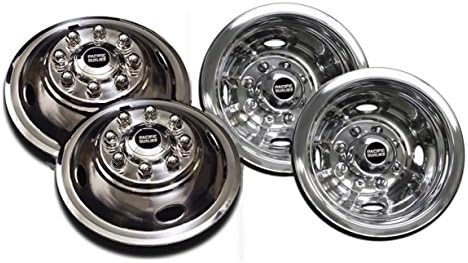
Examine the specific build quality in our full review of the Pacific Dualies 49-1608.
Verifying bolt patterns and professional installation ensures safe simulator mounting
If you are unsure of your requirements, check your current wheel’s bolt pattern and lug count. If your vehicle uses a standard 8-lug or 10-lug configuration, a simulator kit is a viable option. If you require a professional installer to perform the mounting, ensure they are familiar with the specific retention clip or bolt-on requirements of your chosen kit. Proper torque is essential; loose simulators can vibrate off or cause safety hazards during operation, so a qualified installer should verify the security of the mounting hardware.
The other wheel simulator guides we have published
- Choosing the Best Wheel Simulator Kit for Chevy GMC 3500
- The Wheel Simulator Kits That Work Best for Ford F450 F550
- Which Wheel Simulator Kit Is Best for Isuzu NPR W4?
- Best Wheel Simulator Kit for Ford E350 E450
- Polished Stainless Steel Wheel Simulator Kits Compared
- Choosing the Best 16 Inch Wheel Simulator Kit