

Car Forum World is reader-supported: some links on this page are affiliate links, and as an Amazon Associate Car Forum World earns from qualifying purchases at no extra cost to you. Learn more.
Finish type for a wheel simulator kit refers to the surface treatment or material coating applied to the simulator’s face to mimic specific wheel aesthetics. The choice depends on whether you need to replicate a high-gloss mirror effect, a matte machined look, or a standard polished steel appearance for your specific display requirements.
Which Finish Type Suits Your Needs?
| If this is you | The Finish Type that suits you | Why |
|---|---|---|
| You are building a display for a high-end showroom that requires a realistic reflection of the floor. | Mirror Polished | Mirror polished surfaces provide the highest level of reflectivity to mimic premium chrome wheels. |
| You need a versatile look that mimics most standard aftermarket wheels without excessive glare. | Polished Stainless Steel | Polished stainless steel provides a consistent sheen that is durable and common in the industry. |
| You are replicating a specific industrial or “billet” style wheel that has visible tool marks. | Machined | Machined finishes show the raw metal texture, providing a distinct look different from polished surfaces. |
| You are unsure of the specific wheel style and want a standard, reliable appearance. | Polished Stainless Steel | Polished stainless steel is a standard finish that matches a wide variety of common wheel styles. |
Wheel Simulator Kits covered by our own reviews
3 options shown here, $218.17 to $229.99, each with its own full review behind its name.
If you need smaller rims, view our comparison of 16 inch wheel simulator kit options.


How to Establish Your Required Finish Type Before Ordering
Establishing your required finish type involves identifying the specific visual properties of the real wheels you intend to simulate. You should look for the manufacturer’s description of the wheel’s surface, which is usually listed as “Mirror,” “Polished,” or “Machined” in the technical specifications. Because a wheel simulator kit is a visual aid, you must determine if the goal is to replicate the exact light-reflective properties of the target wheel or simply the general shape and diameter.
Truck owners should see our top-rated wheel simulator kit for heavy duty trucks guide.
Photographing the target wheel helps identify the correct simulator finish
To confirm the correct choice, take a photo of the target wheel under the lighting conditions where the simulator will be placed. Look for how the light hits the surface: if the light creates a clear, sharp reflection of the surrounding environment, a mirror polished finish is the correct match. If the light diffuses across the surface with a soft glow, polished stainless steel is the appropriate choice. If the surface appears to have a brushed or raw metal texture, a machined finish is required.
You can find a high-quality wheel simulator kit for Ford E350 E450 on our list.
Matching wheel material ensures the simulator finish remains durable
You should also verify the material of the target wheel, as this dictates the durability of the finish you choose. Stainless steel options are common for simulators because they resist the pitting and corrosion that can occur on lower-grade metals over time. If the target wheel is a high-end chrome, ensure the simulator’s finish is specified as mirror polished to avoid a “flat” appearance that breaks the visual illusion.
Make sure to verify the correct lug count for wheel simulator kits before ordering.
What Goes Wrong With Choosing the Wrong Finish?
Choosing a finish that is too dull for your requirements results in a simulator that looks like a flat grey disc rather than a metallic wheel. If you select a machined finish for a display that requires a mirror-like reflection, the simulator will fail to catch the light, making it stand out as a non-reflective prop. This mismatch breaks the visual continuity of the display, especially in high-visibility areas like a showroom floor.
It is important to confirm the proper wheel diameter for wheel simulator kits for your vehicle.
Choosing a finish that is too reflective ruins the visual illusion
Selecting a finish that is too reflective for a matte-style wheel creates a “cheap” appearance where the simulator looks out of place. A mirror-polished simulator placed next to a matte-finish wheel will catch every overhead light, drawing the eye away from the intended display. This contrast makes the simulator look like a substitute rather than a replica, which can detract from the professionalism of a commercial setup.
Always double-check the required bolt pattern for wheel simulator kits during your research.
Polished stainless steel resists pitting and rust in high-moisture environments
Material choices also impact how the finish ages in different environments. If a simulator with a low-grade finish is used in a high-moisture area, the surface may begin to pit or rust, ruining the visual effect. Choosing a polished stainless steel finish helps mitigate this risk, as it maintains its appearance better than many other surface treatments when exposed to humidity or frequent cleaning.
Beginners can learn about how a wheel simulator kit works in our overview.
What to Do When You Fall Between Two Finish Types?
When you fall between two finish types, such as deciding between polished stainless steel and mirror polished, the decision should be based on the lighting of your installation. If the area has soft, indirect lighting, polished stainless steel is sufficient to provide a metallic look without being overly reflective. In this case, the slightly lower reflectivity of the polished finish is easier to maintain and less prone to showing fingerprints or smudges.
You can also browse the different types of wheel simulator kits available today.
Mirror polished finishes maintain the chrome illusion under bright spotlights
If the area has direct overhead spotlights or bright windows, you should move toward the mirror polished option. High-intensity light requires a higher degree of reflectivity to maintain the illusion of a chrome-plated wheel. If you are unsure, the polished stainless steel option serves as a safer middle ground, as it provides a consistent metallic sheen that is less likely to look “wrong” in a variety of lighting conditions.
Consider exploring various wheel simulator kit alternatives if you want different results.
Polished stainless steel provides a versatile match for complex wheel textures
In cases where the target wheel has a complex finish, such as a “brushed” look that isn’t strictly machined, polished stainless steel remains the most versatile choice. It provides enough texture to look like a real metal component while maintaining a clean, professional appearance. When requirements conflict, prioritize the finish that most closely matches the primary reflective property of the target wheel, as this is the most noticeable attribute to a viewer.
For more details, view our full CHDT66 KWA-K64S 16 inch 8 Lug Snap On review for specifications.
The Process for Selecting Your Finish
A buyer first identifies the specific wheel style they need to replicate and notes its surface properties. They then determine the lighting environment of the display area to see how much reflection is required. Finally, they select the finish that matches both the material look and the light-handling needs of the installation.
Commercial drivers can see how 19.5-inch Wheel Simulators perform in our data review.
Solving the Lighting Reflection Issue
A showroom floor with bright overhead LEDs makes a standard finish look dull and plastic-like. By choosing a mirror polished finish, the simulator reflects the overhead lights and the surrounding floor, creating a convincing chrome effect that blends into the environment.
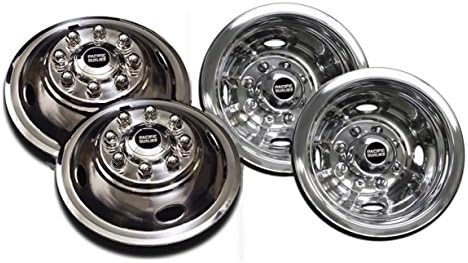
For a deeper dive, see our full Pacific Dualies 49-1608 review for technical specs.
Replicating a Billet Style Wheel
To simulate a billet-style aluminum wheel, a machined finish is necessary to replicate the visible tool marks on the metal face. This ensures the simulator captures the industrial texture of the original wheel rather than a smooth, polished surface.
You can also find our full Pacific Dualies 43-1950 review to see the detailed breakdown.
The other wheel simulator guides we have published
- Which Wheel Simulator Kit Is Best for Heavy Duty Trucks?
- Choosing the Best Wheel Simulator Kit for Chevy GMC 3500
- The Wheel Simulator Kits That Work Best for Ford F450 F550
- Which Wheel Simulator Kit Is Best for Isuzu NPR W4?
- Best Wheel Simulator Kit for Ford E350 E450
- Polished Stainless Steel Wheel Simulator Kits Compared