Bolt pattern is the specific arrangement and spacing of the holes on a wheel hub that allow a wheel to bolt onto a vehicle. Your specific vehicle’s manufacture determines exactly which bolt pattern you must match to ensure a safe and functional fit.
Which Bolt Pattern fits my vehicle?
| If this is you | The Bolt Pattern that suits you | Why |
|---|---|---|
| You own a standard passenger car or crossover | Common patterns like 5×114.3 or 5×120 | These are the most frequent standards for modern consumer vehicles. |
| You drive a heavy-duty truck or large SUV | 8×170 or 8×165.1 | Larger vehicles require more bolts to distribute the higher weight of the chassis. |
| You own a performance sports car | 5×112 or 5×120 | These patterns are standard for European and high-performance brands. |
| You own a commercial van or fleet vehicle | 6×139.7 or 6×150 | Commercial platforms often use six-bolt configurations for heavy load capacity. |
Where these choices show up in our reviews
These 3 have their own full review on this site, and run from $189 to $224.

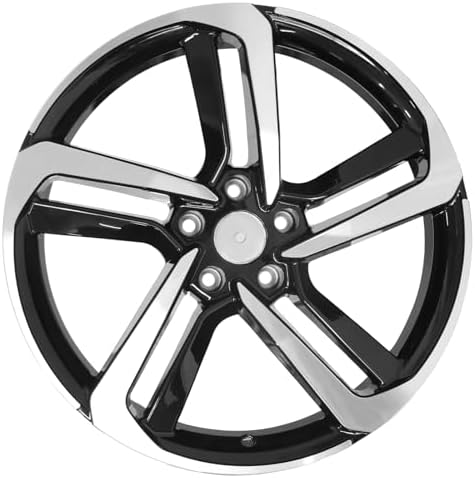
19 Inch Alloy Wheel Rim for Honda Accord
If you want to maintain your vehicle’s factory appearance, view our guide to the best replacement alloy wheels for stock look.
$189 price checked August 2026

Nissan Altima 18×7.5 Machined Aluminum Alloy Wheel
$193.98 price checked August 2026
Read our full Altima Alloy Wheel review
Understanding how the wheel sits in the hub is vital, so learn how to choose your wheel offset (ET).
How do I find my vehicle’s bolt pattern?
To find your bolt pattern, you must identify the distance between the centers of the lug holes, measured in millimeters (mm).
Checking the Owner’s Manual
The vehicle owner’s manual contains the official technical specifications for the wheels and tires. Look for a section titled “Specifications” or “Wheels and Tires” to find the bolt pattern listed in millimeters.
Locating the Door Placard
Many vehicles have a sticker or placard located on the driver’s side door jamb or inside the fuel filler flap. This sticker lists the required tire size and often includes the bolt pattern and offset requirements.
Measuring the Hub Directly
If documentation is unavailable, you can measure the bolt pattern physically using a tape measure or a caliper. Measure the distance from the center of one hole to the center of the hole directly across from it. If the pattern is a 5-bolt design, you must measure the distance between adjacent holes and use trigonometry to find the diameter, or measure the widest point across the hub.
Using the Vehicle Identification Number
You can provide your VIN to a dealership or a certified parts specialist to confirm the exact specifications for your build. Because manufacturers sometimes change bolt patterns mid-year, the VIN ensures you receive the correct data for your specific production date.
What happens if the bolt pattern is incorrect?
An incorrect bolt pattern means the wheel will not physically seat onto the hub, or it will seat improperly, leading to immediate mechanical failure.
The Physical Fit Failure
If the bolt pattern is different from what the hub requires, the wheel will not align with the studs. You will find that the wheel cannot be bolted onto the car because the holes do not line up with the mounting points. This is a hard stop that prevents the installation of the wheel.
Dimensions significantly impact fitment and performance, so research the correct width for alloy wheels before purchasing.
Vibration and Hub Bore Mismatch
If the bolt pattern matches but the center bore is incorrect, the wheel may bolt on but will not sit flush against the hub. This creates a “hub bore mismatch” where the wheel wobbles on the hub. This results in severe vibrations, steering wheel shake, and rapid wear on the wheel bearings at highway speeds.
Structural Integrity Risks
Attempting to force a wheel onto a hub with a slightly different spacing can lead to uneven load distribution. If the bolts are under constant tension because they are not perfectly aligned, it can lead to sheared studs or cracked alloy wheels under heavy loads.
What do I do if my measurements fall between two patterns?
If your measurements fall between two standard bolt patterns, you must verify the exact manufacture specifications before ordering.
Verify the Exact Millimeter Count
Bolt patterns are precise measurements. If your measurement is 114.3mm, do not assume it is a 112mm or 115mm pattern. Even a few millimeters of difference will prevent the wheel from being safely mounted. You must confirm the exact number to the decimal point.
Consult a Qualified Installer
When in doubt, consult a professional wheel installer or a dealership parts department. They have access to the manufacturer’s production data and can confirm the exact bolt pattern for your specific vehicle. It is safer to confirm the data before purchase than to risk a vehicle that cannot be fitted with the correct wheels.
Professional Fitting Requirements
Regardless of the bolt pattern you select, the fitting of alloy wheels is a job for a qualified installer wherever local rules require one. A professional can ensure the wheels are torqued correctly and that the hub bore and offset are compatible with your vehicle’s geometry.