Offset (ET) measures the distance in mm between the wheel’s mounting surface and its centerline. Your specific vehicle dimensions and desired stance determine which measurement is correct for your application.
Which Offset (ET) suits my situation?
| If this is you | The Offset (ET) that suits you | Why |
|---|---|---|
| Replacing factory wheels with identical dimensions | The original factory ET | Matching the original design ensures the wheel sits in the exact same position as the stock equipment. |
| Pushing the wheels further outward for a wider stance | A lower ET number | Lowering the ET value moves the mounting surface toward the outside of the wheel, increasing the protrusion. |
| Tucking wheels further inside the fender for clearance | A higher ET number | Increasing the ET value moves the mounting surface toward the inside of the wheel, pulling it toward the hub. |
| Fitting wider wheels on a narrow vehicle | A lower ET number | A lower ET compensates for the extra width by pushing the wheel face outward to prevent it from hitting the suspension. |
| Fitting narrow wheels on a wide vehicle | A higher ET number | A higher ET helps keep a narrow wheel centered or tucked in to avoid protruding past the fender lip. |
Where these choices show up in our reviews
These 3 have their own full review on this site, and run from $189 to $1893.99.
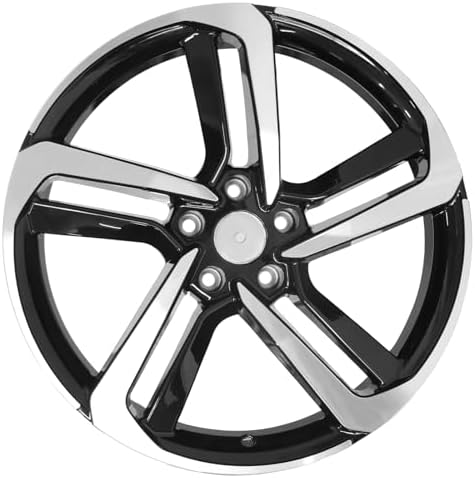
19 Inch Alloy Wheel Rim for Honda Accord
$189 price checked August 2026
Read our full Honda Accord Rim review
If you own a sedan, you can view our comparison of the best alloy wheels for toyota camry.


Alcoa Style Hub Piloted Forged Truck Bus Wheel
Owners of this popular sedan can see our guide to the best alloy wheels for honda accord.
$1893.99 price checked August 2026
How do I find my correct Offset (ET) before ordering?
Finding your correct Offset (ET) requires identifying the factory specifications of your vehicle or measuring your current setup.
The most reliable way to establish your value is to locate the manufacturer’s specifications for your specific year, make, and model. Most manufacturers list the standard wheel offset in the owner’s manual or on the official vehicle specification sheet. You can often find these numbers by searching for the “factory wheel specifications” for your vehicle’s VIN.
Understanding your specific requirements is easy when you learn how to choose your bolt pattern.
If you are looking at your current wheels to replicate them, the Offset (ET) is usually stamped directly onto the inner barrel of the wheel. Look for a series of numbers; the ET value is typically followed by “ET” or “OFF” followed by a number like “45” or “35”. If the numbers are worn away, you can use a measuring tape to find the distance from the hub mounting surface to the centerline of the wheel.
You can also verify the Offset (ET) by checking the technical data of the tires currently on your vehicle. While tire dimensions do not tell you the wheel’s offset, the “width” of the tire often correlates with the wheel width and offset used by the manufacturer to achieve the original fitment.
What happens if the Offset (ET) is wrong?
An incorrect Offset (ET) results in the wheel sitting too far in or too far out from the vehicle’s hub.
Risks of an Offset (ET) that is too low
An Offset (ET) that is too low moves the wheel outward, which can cause the tire to rub against the inner fender liner or the outer lip of the wheel to protrude past the bodywork. This often leads to “rubbing” where the tire makes contact with the metal or plastic of the car during full turns or under heavy load. In some cases, a very low offset can cause the wheel to sit so far out that it interferes with the suspension arms or brake calipers.
Risks of an Offset (ET) that is too high
An Offset (ET) that is too high pulls the wheel inward toward the engine bay. This can cause the tire to rub against the strut tower, the inner fender well, or the brake components. If the wheel is pulled too far in, it may also result in a “tucked” look where the rim sits deep inside the wheel well, potentially reducing the amount of clearance available for the suspension to travel upward.
Ensure a perfect fitment by finding the correct center bore for alloy wheels.
What do I do if I fall between two Offset (ET) values?
Choosing between two Offset (ET) values when you fall between them depends on whether your priority is clearance or aesthetics.
If you are concerned about the wheel rubbing against the suspension or the inner fender, choose the higher Offset (ET) value. This provides more clearance by pulling the wheel inward. If the wheel is still too close to the fender and you need more room for the tire to move, you must confirm the maximum clearance of your wheel well before proceeding.
If you prefer a wider stance and your primary concern is the wheel sticking out too far, choose the lower Offset (ET) value. However, if the lower value causes the wheel to sit outside the fender, you may need to reconsider the wheel width or the offset entirely. Because there is no single “correct” number, you must decide if you prefer the wheel to sit slightly deeper (higher ET) or slightly wider (lower ET) based on the physical limits of your vehicle’s bodywork.
In cases where the difference is only 1mm to 3mm, the visual difference is negligible. In these instances, choose the value that matches the factory specification as closely as possible to ensure the most predictable handling and weight distribution. Always confirm your measurements with a qualified installer before ordering, as they can verify if the chosen Offset (ET) provides enough clearance for your specific suspension setup.