

Car Forum World is reader-supported: some links on this page are affiliate links, and as an Amazon Associate Car Forum World earns from qualifying purchases at no extra cost to you. Learn more.
A steering cylinder is a hydraulic actuator that converts fluid pressure into linear motion to turn the wheels of a vehicle or piece of machinery. You need a steering cylinder when manual steering provides insufficient leverage for the weight of your load or when you require precise, heavy-duty control over a large steering arc. Before choosing a model, you must measure the distance between your existing mounting points and confirm the required stroke length to ensure full steering lock without mechanical interference.
How steering cylinders allow operators to move heavy loads easily
The primary problem this component solves is the mechanical disadvantage of a heavy load on a steering linkage. Without a hydraulic cylinder, the force required to turn wheels under weight can exceed what a human operator can provide or what a standard mechanical gear system can handle without breaking. By using a cylinder, the system moves the heavy lifting to a hydraulic pump, allowing the operator to move massive weight with minimal effort. This translates to smoother operation, reduced operator fatigue, and the ability to move larger machinery safely.
Operators can view our comparison of the best power steering cylinder for Case 580C 580D to find the most durable option.
How a Steering Cylinder Operates
The steering cylinder functions by moving a piston head back and forth inside a tube using pressurized hydraulic fluid. The process follows a specific sequence of fluid movement and mechanical response:
For those maintaining older machinery, see the top-rated power steering cylinder for Ford 600 800.
- Hydraulic fluid enters one side of the cylinder through a port connection, which is the entry point for the hose fitting and fluid flow path.
- The pressure forces the piston head to move toward the opposite side of the cylinder.
- The piston rod, the moving shaft that extends from the cylinder, pushes or pulls the steering linkage.
- As the rod moves, it rotates the wheels or the machinery’s front end.
- Fluid is simultaneously pushed out of the opposite side of the cylinder to allow for continuous movement.
- When the operator stops moving the controls, the fluid remains trapped on both sides of the piston, holding the steering position firmly in place.
Steering Cylinders we have reviewed in detail
Prices across these 3 run from $152.35 to $189; each one has a full review here.
Marine mechanics should consult our guide to the best power steering actuator for Volvo Penta.
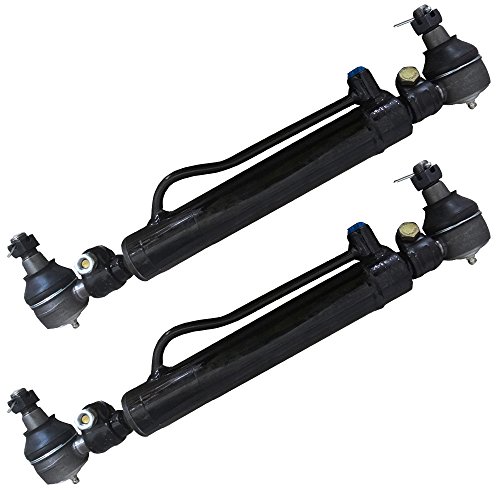

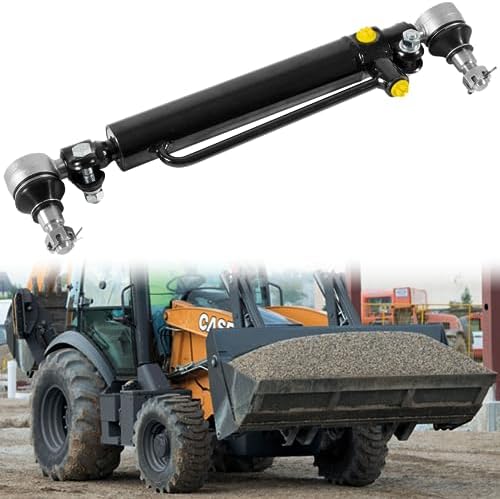
Parts and Specifications That Matter
Several physical dimensions and components dictate how a steering cylinder performs under load. Understanding these terms helps you match the hardware to your specific machinery requirements.
Piston Rod Surface Area and Compatibility
The piston rod determines the surface area available for force multiplication and compatibility with the internal seals. A thicker rod allows the cylinder to generate more pushing force because the hydraulic pressure is distributed over a larger surface. It also dictates the size of the seals required to prevent fluid leaks. If the rod is too thin for the application, the cylinder may struggle to move heavy loads or the rod may bend under high pressure.
Classic car enthusiasts can find the ideal power steering cylinder for Mustang 1965-1966 in our curated list.
Cylinder Bore and Pressure Capacity
The cylinder bore dictates the internal volume and hydraulic pressure capacity of the unit. A larger bore allows for more fluid to move per stroke, which can increase the speed of the steering movement. However, the bore also determines the maximum pressure the cylinder can handle before the internal walls are compromised. You must ensure the bore size matches your pump’s output to prevent seal blowout or structural failure.
For classic car restoration, browse our comparison of the best power steering ram for Chevy Nova Impala.
How mounting eye alignment ensures correct steering linkage positioning
The mounting eye ensures the cylinder aligns correctly with the steering linkage. This is the physical point where the cylinder attaches to the frame or the steering arm. If the mounting eye is not positioned correctly, the cylinder will exert force at an angle, causing premature wear on the seals and the rod. Proper alignment ensures that the cylinder only moves in a straight line, providing consistent steering response.
To better understand the technical side, see how steering cylinder terms and specs are explained.
Port Connection and Fluid Flow
The port connection determines the hose fitting type and fluid flow path into the cylinder. Different machines use different thread types to secure the hydraulic lines. If the port connection does not match your existing hydraulic hoses, you will need adapters or a different cylinder. Correct porting ensures that fluid enters and exits the cylinder with minimal resistance, maintaining the speed of the steering response.
Metric vs. SAE Threading Standards
Choosing between Metric and SAE threading is a critical decision for installation. Mixing M14 and 9/16″ threads prevents installation and causes hydraulic leaks because the threads will not seat properly. You must identify which standard your existing hydraulic system uses before ordering. SAE is common in North American applications, while Metric is the standard for most international and European machinery.
Proper sizing is critical, so learn how to choose your stroke length for steering cylinders.
Rod Diameter and Mounting Compatibility
The rod diameter (e.g., 5/8″ vs 18mm) determines the maximum steering force and compatibility with existing mounting brackets. A larger rod provides more strength but may not fit into the existing brackets on your machine. You must measure your current mounting hardware to ensure the new rod diameter can be secured safely. Choosing a rod that is too small can lead to the rod buckling under heavy loads.
Understanding different applications is easy when you see the various types of steering cylinders explained.
Practical Effects of Steering Cylinder Selection
The choice of cylinder changes how the machine feels to the operator in real-time. A cylinder with a large bore and high pressure rating allows for “heavy” steering, where the machine feels incredibly stable and easy to turn even when carrying maximum capacity. In these cases, the steering feels deliberate and slow, which is often preferred for large construction equipment to prevent over-steering.
If you are looking for different hardware, explore the alternatives to a steering cylinder for your project.
Why cylinder bore size affects steering speed and responsiveness
Conversely, a smaller bore cylinder might provide a “faster” feel. This is useful for smaller utility vehicles or yard equipment where agility is more important than raw lifting power. However, if the cylinder is under-specced for the load, the steering may feel “mushy” or sluggish because the hydraulic system is struggling to generate enough pressure to overcome the friction of the tires.
You can find more technical details in our full Power Steering Cylinder spec breakdown.
How internal pressure capacity prevents wheel drift under heavy weight
The difference also shows up in the “holding” power of the steering. A high-quality cylinder maintains its position perfectly when you stop moving the wheel. If the cylinder is poorly matched to the load, the wheels might drift slightly under heavy weight because the internal seals cannot hold the pressure. This is a situation where the cylinder’s internal pressure capacity becomes the deciding factor for safety.
Frequently asked questions about steering cylinders
How does the performance of this compact model compare to a standard cylinder?
The performance of a compact steering cylinder depends on the bore diameter and stroke length rather than its physical size. A compact cylinder provides the same hydraulic force as a larger one if it has a matching bore diameter and pressure rating. It is simply designed with a shorter body to fit into spaces where a standard, long-bodied cylinder would be physically impossible to mount.
For specific assist requirements, view our review of the 84-50012AN Ram Assist.
Will it hold up under heavy-duty loads or just light yard work?
A steering cylinder will hold up under heavy-duty loads if its bore pressure rating exceeds the peak output of your hydraulic pump. If the cylinder is rated for industrial-grade pressures, it can handle the stress of heavy machinery. For light yard work, a lower-pressure cylinder is often sufficient and may offer a smoother, more responsive feel for smaller vehicles.
Professionals can look at our spec breakdown of the PS1010 Power Steering Cylinder.
Who Needs a Steering Cylinder
You need a steering cylinder if you are operating machinery that requires moving heavy loads over a wide arc, such as a tractor, a forklift, or a large excavator. It is necessary for any application where a manual steering wheel would be physically impossible for a human to turn against the resistance of the weight. If your machine requires high-torque rotation of the front end, a hydraulic steering cylinder is the standard solution.
For specific right-side mounting, see our full review of the 1201-1602 Steering Cylinder.
Why light duty vehicles do not require hydraulic steering cylinders
You do not need a steering cylinder for light-duty vehicles, small carts, or any machinery where the wheels can be turned by hand or through a simple mechanical gear system. If the weight of the load does not create significant friction against the ground, the added complexity and cost of a hydraulic system are unnecessary. These applications are better served by standard mechanical steering components.
The other steering cylinder guides we have published
- Which Power Steering Cylinder Is Best for Case 580C 580D?
- Best Power Steering Cylinder for Ford 600 800
- Reliable Power Steering Rams for Chevy Nova Impala Compared
- Choosing the Best Steering Cylinder for Massey Ferguson Tractor
- The Power Steering Cylinders That Work Best for John Deere
- Which Power Steering Actuator Is Best for Volvo Penta?