

Car Forum World is reader-supported: some links on this page are affiliate links, and as an Amazon Associate Car Forum World earns from qualifying purchases at no extra cost to you. Learn more.
A steering cylinder is a hydraulic actuator that converts fluid pressure into linear motion to turn wheels or heavy machinery. You need a cylinder that matches your specific steering geometry and load requirements to ensure safe, predictable movement. Before ordering, you must measure your available mounting space and confirm your system’s operating pressure, as a mismatch in these values can lead to mechanical binding or hydraulic failure.
If you are upgrading your machinery, see our comparison of power steering cylinders for Case 580C 580D.
Steering Cylinder Capability and Performance
The performance of a steering cylinder depends on its internal volume and the pressure it can withstand without seal failure. Many buyers assume a larger cylinder always provides more power, but the relationship between bore size and pressure determines the actual force available for turning.
Farmers can find the ideal power steering cylinder for Ford 600 800 on our dedicated roundup.
- Bore Pressure Rating – This measures the maximum internal force the cylinder can withstand, typically listed in PSI or Bar. A higher number allows the cylinder to handle higher pump outputs without blowing seals or suffering structural failure.
- Bore Diameter – This measures the internal width of the cylinder tube. A larger bore increases the surface area for the fluid to act upon, which generates more pushing force for a given amount of pressure.
- Stroke Length – This measures the distance the piston head travels from fully retracted to fully extended. You need a stroke long enough to achieve full steering lock, but a stroke that is too long may cause the cylinder to hit the frame or linkage.
- Piston Rod – This is the moving shaft that transmits force to the steering linkage. The surface area of the rod determines how much force is available in the “retract” direction, and its diameter must match your existing seals for a proper fit.
- Cylinder Bore – This dictates the internal volume and hydraulic pressure capacity of the unit. While it influences force, it also affects the speed of the steering; a larger bore may move slower than a smaller one under the same flow rate.
Where these choices show up in our reviews
Each of the 3 shown here has its own full review on this site; they run from $145 to $480.
Selecting the right component is easier when you view our guide to the best steering cylinder for Massey Ferguson tractor.
Marine operators can find our analysis of the top power steering actuator for Volvo Penta.
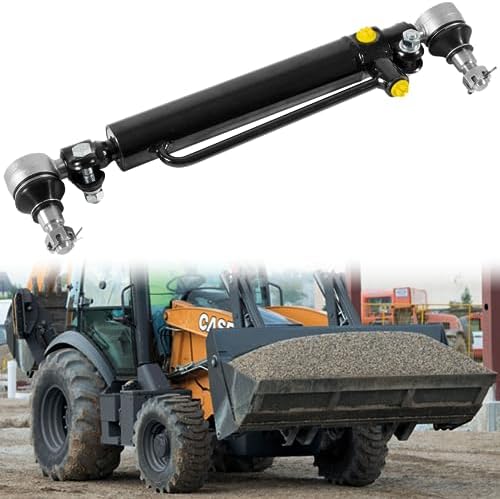


Steering Cylinder Physical Dimensions
Physical dimensions determine whether the cylinder will physically fit into the chassis or frame of your vehicle. If the cylinder is even slightly too long or too wide, it may interfere with other components or fail to reach the necessary angle.
Classic car enthusiasts can view our comparison of the best power steering cylinder for Mustang 1965-1966.
- Mounting Eye – This is the forged or machined hole used to bolt the cylinder to the steering linkage. It ensures the cylinder aligns correctly with the geometry of your steering system.
- Port Connection – This determines the size and type of the hose fitting where fluid enters and exits the cylinder. You must match these to your existing hydraulic hoses to ensure a leak-free connection.
- Rod Diameter – This measures the thickness of the moving shaft. It determines the maximum steering force the rod can withstand before bending and must be compatible with your mounting brackets.
- Included Hardware – This refers to the bolts and brackets provided with the unit. Only 2 of the 11 steering cylinder listings we screened state that they include hardware; most listings require you to source your own mounting hardware.
- Pieces per Pack – This indicates the quantity of cylinders included in a single order. 10 of the 11 steering cylinder listings we screened state the number of cylinders, with most being sold as a single unit.
Steering Cylinder Standards and Fittings
Compatibility standards ensure that the new cylinder can be integrated into an existing hydraulic system without custom machining. Mixing different threading standards is a common cause of installation failure and hydraulic leaks.
For classic car restoration, see our comparison of the best power steering ram for Chevy Nova Impala.
- Metric vs. SAE Threading – This defines the thread standard used for the mounting eyes and ports. Mixing M14 and 9/16″ threads prevents installation and causes hydraulic leaks because the threads will not seat correctly.
- Rod Diameter (e.g., 5/8″ vs 18mm) – This is a measurement of the shaft thickness. Choosing between 5/8″ and 18mm determines the maximum steering force and compatibility with existing mounting brackets.
- Hydraulic Seal Kit – This is a set of internal rings and gaskets that keep fluid inside the cylinder. These kits allow for maintenance and leak repair without needing to replace the entire cylinder body.
- Hydraulic Hose – This transmits pressurized fluid from the pump to the cylinder. The hose must be rated for the same pressure as the cylinder‘s bore pressure rating to prevent bursting.
- Mounting Hardware – These are the specific bolts and brackets used to secure the cylinder to the chassis or frame. Proper hardware ensures the cylinder does not shift under the high stress of steering maneuvers.
Common Steering Cylinder Confusions
Buyers often confuse internal dimensions with external lengths, which can lead to ordering a cylinder that is too long for the mounting space. It is vital to distinguish between the movement of the piston and the physical size of the housing.
Agricultural specialists can browse our roundup of the best power steering cylinder for John Deere.
To understand the different mechanical designs available, see the different types of steering cylinders explained.
Difference between steering cylinder stroke length and total cylinder length
Stroke Length vs. Total Cylinder Length
Stroke length is only the distance the piston travels. Total cylinder length includes the housing, the rod extension, and the mounting eyes. A cylinder can have a long stroke but a short total length, or vice versa.
Beginners should start by learning how a steering cylinder works and what it is.
How bore and rod diameters affect steering cylinder force and strength
Bore Diameter vs. Rod Diameter
The bore diameter is the inside of the tube, while the rod diameter is the thickness of the moving shaft. A larger bore provides more force, while a thicker rod provides more structural strength and more force in the retraction direction.
Before making a purchase, review our guide to steering cylinder warranties before buying.
You can find more technical details in our spec breakdown of the Power Steering Cylinder.
Maintaining operating pressure below the steering cylinder bore pressure limit
Bore Pressure vs. Operating Pressure
Bore pressure is the maximum limit the cylinder can withstand before failing. Operating pressure is the actual pressure your pump provides. You must ensure your operating pressure stays below the cylinder’s rated bore pressure to avoid seal blowout.
For specific performance data, see our full review of the PS1010 Power Steering Cylinder.
Compatibility issues between metric and SAE steering cylinder measurements
Metric vs. SAE Measurements
Metric measurements use millimeters (like 18mm), while SAE uses inches (like 5/8″). These are not interchangeable. If your existing mounting brackets are 5/8″, a metric cylinder will not bolt on without a specialized adapter.
Heavy-duty users can view our spec breakdown of the SX Power Steering Actuator.
Browse our other steering cylinder pages
- Which Power Steering Cylinder Is Best for Case 580C 580D?
- Best Power Steering Cylinder for Ford 600 800
- Reliable Power Steering Rams for Chevy Nova Impala Compared
- Choosing the Best Steering Cylinder for Massey Ferguson Tractor
- The Power Steering Cylinders That Work Best for John Deere
- Which Power Steering Actuator Is Best for Volvo Penta?