

Car Forum World is reader-supported: some links on this page are affiliate links, and as an Amazon Associate Car Forum World earns from qualifying purchases at no extra cost to you. Learn more.
Rod diameter for a steering cylinder measures the thickness of the moving piston shaft that transmits force to the steering linkage. You must match this specific dimension to your existing mounting hardware and hydraulic requirements to ensure the cylinder can move freely without binding or failing under load.
Which Rod Diameter Suits Your Steering Cylinder?
| If this is you | The Rod Diameter that suits you | Why |
|---|---|---|
| Replacing a standard automotive steering ram | 1.00 in. to 1.25 in. | These diameters provide sufficient surface area for passenger vehicle loads while remaining compatible with common mounting brackets. |
| Operating a heavy-duty agricultural trailer | 1.50 in. to 1.75 in. | Larger rods provide the structural integrity needed to resist bending during high-torque maneuvers in heavy machinery. |
| Installing a custom industrial steering actuator | 2.00 in. or larger | Industrial applications requiring extreme force often necessitate thicker rods to manage high internal pressures without deformation. |
| Modifying a small-scale hydraulic steering unit | 0.75 in. to 1.00 in. | Smaller diameters are often sufficient for light-duty applications where space is limited and force requirements are low. |
Steering Cylinders covered by our own reviews
From $109 to $279: 3 of the 11 in this category we have reviewed in full.
Learning about the different designs is easier when you view the types of steering cylinders explained.
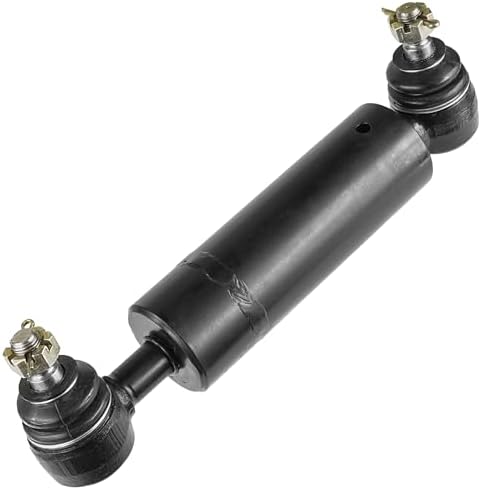


How do I measure the correct Rod Diameter for my steering cylinder?
Determining the correct rod diameter requires identifying the exact thickness of the piston rod on your current cylinder or confirming the specifications of your planned mounting hardware. You should measure the diameter of the shaft itself, not the outer housing or the cylinder bore. Use a pair of digital calipers to get a precise reading in inches, as even a 1/16 in. difference can prevent a cylinder from seating correctly in a mounting bracket.
Locating or measuring the steering cylinder rod diameter
Locate the manufacturer’s identification tag or stamped markings on the cylinder body. These markings usually list the rod diameter alongside other critical figures like stroke length and bore pressure. If the markings are worn or missing, you must measure the rod. Measure the rod at its midpoint, away from the mounting eyes, to ensure you are getting the diameter of the shaft rather than a tapered section or a fitting.
Beginners should start by reading how a steering cylinder works and functions.
Matching steering cylinder rod diameter to mounting hardware
Verify the compatibility of your mounting hardware before ordering. The rod diameter must align with the internal diameter of any bushings or the specific spacing of the mounting eyes. If your steering linkage relies on a specific rod size to maintain alignment, you must ensure the new cylinder provides that exact dimension. A mismatch here is a physical impossibility for installation.
What happens if the Rod Diameter is too small or too large?
A rod diameter that is too small for the intended application leads to structural failure or “buckling” under heavy loads. When the steering force exceeds the rod’s ability to resist bending, the rod may warp or snap. This often results in a complete loss of steering control or a catastrophic mechanical failure of the steering linkage. Because the rod is the primary moving component, its thickness is the limiting factor for the maximum force the cylinder can safely exert.
If a cylinder isn’t right, explore the steering cylinder alternatives for your project.
This error often requires replacing the entire steering linkage to accommodate the larger cylinder.
How much pressure can a 1.25 in. rod actually handle before it begins to bend? A 1.25 in. rod can withstand significantly more force than a 1.00 in. rod, but its limit is strictly defined by the material grade and the distance between mounting points. If you are unsure of the load, it is safer to select a slightly larger rod diameter that fits your mounting hardware rather than a smaller one that might buckle.
For specific parts, see our Power Steering Cylinders full spec review.
What should I do if my requirements fall between two Rod Diameter sizes?
When your required dimensions fall between two standard rod diameters, you must choose the larger diameter that still fits your mounting hardware. In steering systems, the priority is the structural integrity of the rod. A larger rod provides a higher safety margin against bending and provides a more stable platform for the steering linkage to operate against.
Choosing rod diameter based on space or pressure requirements
If the larger rod diameter does not fit your existing mounting brackets, you cannot simply “make it work.” You must instead choose the smaller diameter that fits the hardware and verify that the smaller diameter meets the minimum pressure requirements for your application. This choice depends entirely on whether your system is limited by available space or by the amount of force required to turn the wheels. If you have the space, choose the larger rod for strength. If you are constrained by the mounting points, you must ensure the smaller rod is rated for the necessary load.
Detailed information is available in our full Caltric HY101/1 review.
Sourcing custom brackets to accommodate larger rod diameters
In cases where the mounting hardware is the primary constraint, you may need to source custom mounting eyes or brackets. This allows you to use the larger, stronger rod diameter while still securing it to your existing steering linkage. It is often more cost-effective to replace a pair of mounting brackets than to replace an entire steering system because a rod was too large to fit.
Checking port placement and orientation for different rod sizes
Always confirm the mounting orientation and port placement before finalizing a choice between two sizes. A cylinder with a larger rod might have different port positions than a smaller version of the same model. Ensure that the hydraulic lines can reach the cylinder and that the cylinder can be positioned to provide the correct angle of force. If the port locations differ, the choice of rod diameter may dictate the entire layout of your hydraulic plumbing.
You can find a breakdown in our JEENDA Power Steering Cylinder review.
Consulting a qualified installer for steering cylinder rod selection
The installation of a steering cylinder is a task that requires a qualified installer, especially when dealing with high-pressure hydraulic systems. Because rod diameter is a critical structural component, an installer can help confirm that the chosen size provides the necessary stability for your specific vehicle or machinery. They can also verify that the cylinder will reach its full stroke without hitting the frame or other components. Before ordering, provide your installer with the exact mounting dimensions and the required steering force to ensure the correct rod diameter is selected.
Browse our other steering cylinder pages
- Heavy Duty Steering Cylinders for Case 480B 480C Compared
- Which Power Steering Cylinder Is Best for Case 580C 580D?
- Best Power Steering Cylinder for Ford 600 800
- Reliable Power Steering Rams for Chevy Nova Impala Compared
- Choosing the Best Steering Cylinder for Massey Ferguson Tractor
- The Power Steering Cylinders That Work Best for John Deere