Center Bore refers to the diameter of the hole in the center of an alloy wheel that fits over the hub of a vehicle. Your specific vehicle’s hub design determines the exact millimeter measurement you must match to ensure a secure and stable fit.
Which Center Bore suits my vehicle?
| If this is you | The Center Bore that suits you | Why |
|---|---|---|
| A driver of a standard passenger car (e.g., VW, Ford, or Toyota) | The specific mm diameter listed in your vehicle’s manual | Standard passenger cars use various bore sizes depending on the region and manufacturing year. |
| An owner of a heavy-duty truck or large SUV | A larger mm diameter (often 110mm to 130mm) | Heavy-duty vehicles require larger bores to accommodate larger hubs and provide structural stability. |
| A driver of a performance car with a multi-bolt pattern | The exact mm match for your hub | Performance applications require a precise press-fit to eliminate vibration and ensure even load distribution. |
| A driver of a vehicle with a “hub-centric” design | The exact mm diameter of your hub | In hub-centric systems, the wheel is held in place by the center bore rather than just the lug studs. |
| A driver of a car with a “lug-centric” design | A bore that is slightly larger than your hub | Lug-centric wheels rely on the studs for centering, but the bore must still be large enough to clear the hub. |
Alloy Wheels covered by our own reviews
These 3 have their own full review on this site, and run from $189 to $224.

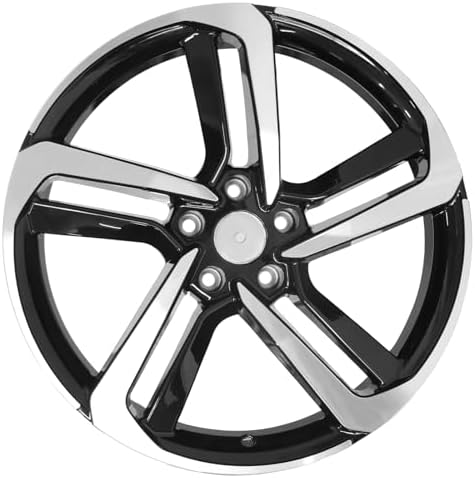
19 Inch Alloy Wheel Rim for Honda Accord
$189 price checked August 2026
Read our full Honda Accord Rim review
If you own this specific sedan, see our roundup of top-rated Honda Accord wheels.

How do I find the correct Center Bore for my vehicle?
To find the correct Center Bore, you must identify the diameter of the hub your vehicle uses. This is not a universal standard and varies significantly between manufacturers and models.
Checking the vehicle’s service documentation
The most reliable way to find your Center Bore is to consult the owner’s manual or the official technical specifications provided by the manufacturer. Look for the “Wheel Specifications” or “Tire and Wheel” section, which will list the Center Bore in millimeters (mm).
Using the Vehicle Identification Number (VIN)
If the owner’s manual is unavailable, you can provide your VIN to a certified dealership or a specialized wheel retailer. They can access the original factory build sheet to confirm the exact hub diameter required for your specific chassis.
Measuring the existing hub
You can establish your value by physically measuring the hub of your current wheel. Remove the wheel and use a large digital caliper or a large-diameter diameter gauge to measure the diameter of the protruding hub. Ensure you are measuring the diameter of the hub itself, not the bolt circle or the distance between the studs.
Distinguishing the hub from the bolt circle
Do not confuse the Center Bore with the PCD (Pitch Circle Diameter). The PCD is the distance between the centers of the lug studs, while the Center Bore is the diameter of the central hole. You need the mm measurement for the hole, not the distance between the bolts.
You should also understand how to calculate the correct offset for your new rims.
What happens if the Center Bore is the wrong size?
The Center Bore must match your vehicle’s hub as closely as possible to ensure safety and ride quality. A mismatch in either direction creates specific mechanical issues.
What happens if the Center Bore is too small?
If the Center Bore of the alloy wheel is smaller than the hub of your vehicle, the wheel will not physically seat onto the hub. You will be unable to mount the wheel because the hub will hit the inner lip of the wheel’s center hole. This is a hard physical limit that prevents installation.
What happens if the Center Bore is too large?
If the Center Bore of the alloy wheel is significantly larger than your vehicle’s hub, the wheel may be “lug-centric.” This means the wheel is held in place solely by the wheel studs rather than being centered by the hub. This can lead to several issues depending on the vehicle’s design.
Vibration and steering wheel shake
In many vehicles, a Center Bore that is too large leads to “hub-centric” instability. Because the wheel is not perfectly centered on the hub, it can develop a slight wobble. This often manifests as a high-frequency vibration in the steering wheel or the seat at highway speeds, even if the wheels are balanced.
Uneven tire wear and stud stress
When a wheel is not properly centered by the hub, the weight of the vehicle is distributed unevenly across the lug studs. This can cause premature wear on the studs and lead to uneven tire wear, as the contact patch of the tire may not be perfectly centered on the road surface.
What do I do if my hub size falls between two standard options?
Sometimes a vehicle’s hub diameter may fall between two common commercial Center Bore sizes, or a buyer may find a wheel that is slightly larger than their hub but smaller than the next size up. In these cases, the decision depends on whether the vehicle is hub-centric or lug-centric.
Choosing for hub-centric vehicles
The requirement for a press-fit
If your vehicle is hub-centric, the Center Bore must be an exact match. If the wheel’s bore is even slightly larger than the hub, the wheel will not be centered correctly. For these vehicles, you must find an alloy wheel that matches your hub diameter exactly to ensure a press-fit.
Choosing for lug-centric vehicles
Prioritizing clearance over fitment
If your vehicle is lug-centric, the wheel is held by the studs, and the Center Bore’s primary job is to provide clearance. In this scenario, if your hub is 66.6mm and the available wheels are 67.1mm or 71.6mm, you should select the smallest available option that still clears the hub. Because the studs do the centering, a slightly larger bore is acceptable as long as it does not exceed the limits of the wheel’s structural integrity.
Consulting a qualified installer
Because incorrect Center Bore measurements can lead to safety risks or mechanical failures, always confirm your measurements with a qualified wheel installer before ordering. A professional can verify if a specific bore size is safe for your vehicle’s weight and hub configuration, ensuring the wheel sits correctly and remains secure during operation.