A car alternator is an electrical generator that converts mechanical energy from the engine into electrical energy to power a vehicle’s systems. It serves as the primary source of electricity while the engine is running, ensuring that the battery remains charged and that electrical components receive a consistent flow of power.
The problem an alternator solves is the finite capacity of a vehicle’s battery. While a battery provides the initial surge of current needed to start the engine, it cannot provide a continuous supply of electricity for lights, fans, and electronics without eventually draining. The alternator prevents this by constantly replenishing the battery’s charge and powering the vehicle’s electrical load simultaneously.
How does a car alternator work?
The car alternator works by using electromagnetism to produce an alternating current (AC) which is then converted into direct current (DC) for use by the vehicle’s electrical system. This process follows a specific sequence of mechanical and electrical steps:
- The engine’s crankshaft rotates a pulley at the front of the engine bay.
- This pulley is connected to the alternator’s rotor, which is a coil of wire wrapped around an iron core.
- As the rotor spins inside the stationary outer housing (the stator), it creates a moving magnetic field.
- This moving magnetic field induces an electrical current within the copper windings of the stator.
- An internal rectifier, consisting of a series of diodes, converts this alternating current into the direct current required by the vehicle’s electronics.
- A voltage regulator monitors the output and adjusts the amount of current flowing to the alternator to maintain a steady voltage, typically between 13.5 and 14.5 volts.
Car Alternators we have reviewed in detail
Prices across these 3 run from $108.99 to $179.39; each one has a full review here.
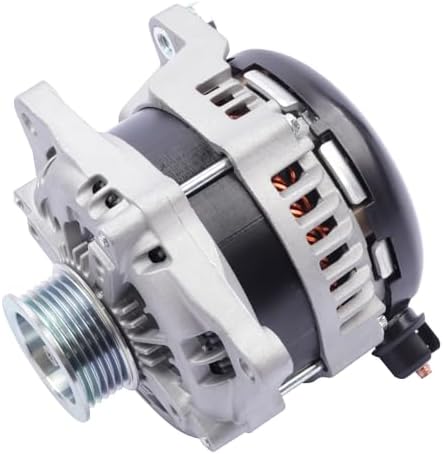
Explorer 2013-2019 3.5L V6 Turbocharged Alternator
$179.39 price checked August 2026
Read our full Explorer Alternator review
If you own a Ford, you can compare the best alternator for Ford Explorer 2013-2019 to find a reliable replacement.


DB Electrical 400-52252R 12V 130A Remanufactured Alternator
$108.99 price checked August 2026
Drivers looking for a cost-effective swap can view our best budget alternator for Honda Accord 2013-2017 comparison.
Parts and stages that matter to a buyer
Several specific components within the alternator determine its output capacity and reliability. Understanding these terms helps in identifying why different units vary in performance.
Amperage and Output Capacity
Amperage refers to the total amount of electrical current the alternator can produce, measured in amps. A higher amperage rating allows a vehicle to run more power-hungry accessories, such as high-intensity off-road lights or heavy-duty winches, without causing the voltage to drop. If the amperage is too low for the vehicle’s needs, the alternator will struggle to keep up, potentially leading to dimming lights or a failing charge.
Voltage Regulation
Voltage is the electrical pressure provided by the alternator. Most modern vehicles require a steady output near 14 volts. The voltage regulator is the component responsible for this consistency. A faulty regulator can cause “overcharging,” where the voltage spikes and damages the battery, or “undercharging,” where the battery slowly drains even while the engine is running.
Remanufactured vs. New Units
Buyers often choose between a new production alternator and a remanufactured unit. A remanufactured alternator has been disassembled, cleaned, and rebuilt using a combination of original parts and new components. These units are often more affordable but rely on the quality of the rebuilding process. A new unit is manufactured from scratch and typically includes a fresh warranty from the manufacturer.
Understanding your specific needs is easier when you learn how much amperage for car alternators you actually require.
Pulley Diameter and Compatibility
The pulley is the wheel that connects the alternator to the engine’s serpentine belt. The diameter of this pulley is critical for compatibility. If the pulley diameter does not match the original equipment (OE) specifications, the alternator will spin at the wrong speed. A pulley that is too small will cause the alternator to spin too fast, potentially overheating the internal components, while a pulley that is too large will spin too slowly to generate sufficient power.
What does a functioning alternator change in practice?
A functioning alternator ensures that the vehicle’s electrical systems remain consistent regardless of how long the engine has been running. In daily use, this means the headlights remain at full brightness, the power steering remains responsive, and the dashboard electronics stay active. If the alternator is failing, the first signs are often “parasitic” symptoms: the battery light on the dashboard may illuminate, or the interior lights may flicker when the engine is under load.
The difference between a high-output and a standard alternator shows up primarily in heavy-duty applications. For a standard commuter car, a factory-spec alternator provides more than enough power for basic electronics. However, for a truck equipped with a large cooling fan or a trailer with auxiliary lighting, a high-output alternator is necessary to prevent the system from being under-provisioned. In these cases, the difference is the ability to run additional hardware without compromising the vehicle’s core functionality.
Who needs a car alternator?
A car alternator is required by any internal combustion engine vehicle that relies on a 12V or 24V electrical system for operation. This includes standard passenger cars, pickup trucks, motorcycles, and heavy machinery.
When is a replacement necessary?
A replacement is necessary when the current unit can no longer maintain the required voltage or amperage. Common conditions for replacement include a vehicle that fails to start after being left sitting for a few hours, a battery that is frequently drained despite being new, or a visible “alternator” warning light on the instrument cluster. These symptoms indicate that the alternator is no longer successfully converting mechanical energy into electrical energy.
Who does not need one?
Vehicles that do not have an internal combustion engine or a mechanical drive system do not use a traditional car alternator. Electric vehicles (EVs) and hybrid vehicles use high-voltage batteries and separate charging systems to power the drivetrain, meaning they do not require a belt-driven alternator to maintain their primary power source.