Flywheel type refers to the mechanical design of the component that provides the surface for the clutch disc to engage against. Your specific vehicle requirements, such as engine torque, weight, and intended use, determine whether you need a Dual Mass Flywheel (DMF) or a Solid Flywheel.
Which Flywheel Type Suits Your Situation?
| If this is you | The Flywheel Type that suits you | Why |
|---|---|---|
| You drive a modern passenger car with a multi-cylinder engine. | Dual Mass Flywheel (DMF) | DMFs use internal springs to dampen engine vibrations and harmonics before they reach the drivetrain. |
| You operate heavy-duty machinery or a high-torque commercial vehicle. | Solid Flywheel | Solid flywheels offer higher durability and heat resistance for sustained, heavy-load applications. |
| You are replacing a failed unit on a high-performance sports car. | Solid Flywheel | Solid designs provide a more stable surface for aggressive power delivery and high-friction engagement. |
| You want to minimize drivetrain shudder in a daily driver. | Dual Mass Flywheel (DMF) | The primary function of a DMF is to isolate the engine’s secondary vibrations from the transmission. |
Clutch Flywheels we have reviewed in detail
From $130.50 to $409.99: the 3 in this category we have reviewed in full.
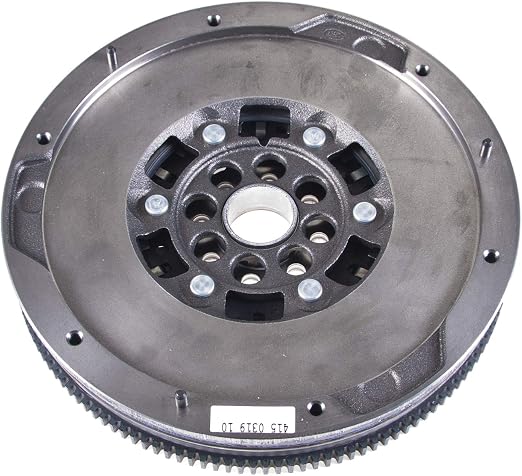

Subaru Genuine Clutch Flywheel 12342AA090
If you are on a budget, see the best dual mass flywheel for heavy duty use under $500 to find a durable option.
$409.99 price checked August 2026
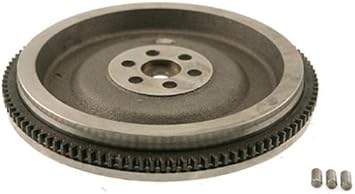
Auto 7 223-0050 Clutch Flywheel
$130.50 price checked August 2026
Read our full 223-0050 Clutch Flywheel review
Identifying the correct fitment requires you to determine the proper spline count for clutch flywheels before ordering.
How to Identify the Correct Flywheel Type for Your Vehicle
To identify the correct flywheel type, you must first confirm the original equipment (OE) specification for your specific engine and transmission pairing.
Matching the OEM Part Number
The most reliable method is to locate the original equipment part number stamped directly onto the existing flywheel. This number is usually found on the face of the flywheel or on the mounting flange. You can then use this number to verify if the vehicle was designed for a Dual Mass Flywheel or a Solid Flywheel.
Verifying Spline Count and Hub Diameter
If the part number is missing, you must physically measure the input shaft splines and the hub diameter. The number of teeth (spline count) and the exact diameter of the hub must match your transmission’s input shaft perfectly. A mismatch in these dimensions will prevent the flywheel from seating correctly or cause catastrophic shearing during engagement.
Consulting Industry Benchmarks
When identifying the required engineering standard, refer to the original manufacturer’s specifications. For example, identifying whether the vehicle uses a design similar to the Schaeffler LuK or Sachs standards can help confirm the required weight and spring rate for the flywheel’s operation.
What Happens if You Choose the Wrong Flywheel Type?
Selecting a flywheel type that does not match the vehicle’s engineering requirements leads to specific mechanical failures based on the direction of the mismatch.
You should also verify the correct bolt hole pattern for clutch flywheels to ensure the unit aligns with your engine.
Risks of Installing a Solid Flywheel where a DMF is Required
If a vehicle designed for a Dual Mass Flywheel is fitted with a Solid Flywheel, the drivetrain may experience severe harmonic vibration. Because the solid unit lacks internal dampening, engine vibrations travel directly to the transmission. This often results in severe drivetrain shudder, premature bearing wear, and a rougher idle at low RPMs.
Risks of Installing a DMF where a Solid Flywheel is Required
Installing a Dual Mass Flywheel in a heavy-duty application designed for a Solid Flywheel can lead to rapid component failure. The internal springs of a DMF may not be rated for the extreme torque of heavy machinery, causing the internal components to collapse or glaze. This leads to a loss of friction material on the clutch disc and potential failure of the flywheel’s internal dampening system.
Heat Dissipation Failure and Glazing
Using a flywheel with incorrect weight or material properties can cause improper heat dissipation. If the flywheel cannot shed heat as fast as the friction material generates it, the clutch disc will glaze. This creates a smooth, glass-like surface on the friction material, resulting in slippage and a failure to engage the drivetrain properly.
What Should You Do if Your Vehicle Falls Between Types?
If your vehicle’s specifications sit on the border between a heavy-duty application and a passenger-car application, you should prioritize the original equipment (OE) configuration over any aftermarket upgrade.
The Importance of OE Matching
In cases where the distinction between a “heavy-duty” solid flywheel and a “performance” solid flywheel is unclear, the safest choice is the component that matches the factory installation. Engineering teams calibrate the flywheel’s weight and spring rate to specific engine output levels; deviating from this can cause the harmonic vibrations or heat issues described above.
Verification by a Qualified Installer
Because flywheel specifications are critical to the mechanical integrity of the drivetrain, you should have a qualified technician verify the requirements before ordering. A professional can confirm the hub diameter, spline count, and the specific flywheel type required for your vehicle’s unique configuration. This ensures that the component you receive is compatible with your transmission’s input shaft and the engine’s torque curve.