Spline count refers to the specific number of teeth on the mounting surface where the clutch assembly connects to the flywheel. The correct count is determined entirely by your vehicle’s engine and transmission specifications, not by a preference for larger or smaller numbers.
Which Spline Count Suits Your Situation?
| If this is you | The Spline Count that suits you | Why |
|---|---|---|
| You are replacing a flywheel on a standard passenger car. | The count specified by your vehicle’s OEM. | Passenger vehicles use standardized counts that vary by engine block size. |
| You are working on a heavy-duty commercial truck. | The high-count spline matching your specific transmission. | Heavy-duty applications often utilize higher tooth counts to distribute high torque. |
| You are installing a performance-oriented racing flywheel. | The count matching your existing input shaft. | Performance swaps require a precise match to the existing drivetrain hardware. |
| You are restoring a vintage or classic vehicle. | The original factory spline count. | Older vehicles often use unique, non-standard counts that differ from modern parts. |
Reviewed examples from this category
These 3 have their own full review on this site, and run from $159.13 to $508.92.


Schaeffler LuK DMF063 Dual Mass Flywheel
If you are working with a tight budget, see the best dual mass flywheel for heavy duty use under $500 for reliable performance.
$319.30 price checked August 2026
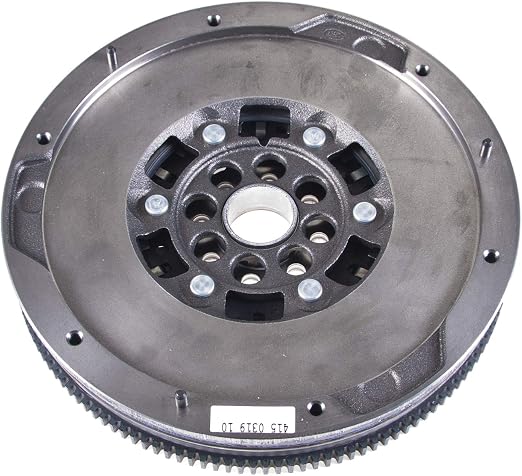
LuK DMF117 Dual Mass Flywheel
$159.13 price checked August 2026
Read our full DMF117 Dual Mass Flywheel review
Understanding the mechanics of the unit is vital, so learn how to choose your flywheel type before making a purchase.
How Do I Find My Correct Spline Count?
Finding your spline count requires identifying the specific number of teeth on the input shaft or the flywheel mounting surface. You can establish this value by consulting your vehicle’s technical documentation or by performing a physical count of the teeth.
Using OEM Part Numbers
The most reliable way to confirm your spline count is to locate the Original Equipment Manufacturer (OEM) part number for your flywheel. This number is typically found on a stamped plate or engraved directly into the metal of the existing flywheel. Once you have this number, you can verify the corresponding spline count through a parts catalog or by contacting a specialist supplier.
Performing a Manual Count
If you do not have access to the original part number, you can count the splines manually. Remove the flywheel and count every individual tooth on the mounting surface. It is helpful to mark a starting point with a scribe or paint pen to ensure you do not count the same tooth twice or skip one during the rotation.
Checking Service Manuals
Vehicle service manuals and workshop guides often list the required spline count under the drivetrain or clutch system section. If you know your engine model and transmission type, these manuals provide the exact technical specifications required for a correct fit.
What Happens if the Spline Count is Incorrect?
An incorrect spline count leads to a mechanical mismatch where the clutch hub cannot slide onto the flywheel or the input shaft. This prevents the assembly from being installed at all, as the teeth will not align to mesh with one another.
Ensuring a perfect fit is critical, so verify how to choose your bolt hole pattern before ordering your new part.
Total Installation Failure
If the spline count is off by even a single tooth, the hardware will physically block the connection. You will find that the hub cannot seat properly against the flywheel, making it impossible to torque the mounting bolts. This is a hard mechanical stop that cannot be bypassed by forced installation.
Drivetrain Shearing Risks
In rare cases where a component might be forced onto a slightly mismatched surface, the result is catastrophic drivetrain failure. If the teeth do not mesh perfectly, the stress of engine torque will cause the splines to shear off under load. This leads to a complete loss of power transmission and potentially severe damage to the input shaft and the flywheel itself.
What to Do if My Vehicle Falls Between Two Spline Counts?
If your research suggests your vehicle could use either of two different spline counts, you must verify the specific requirements of your transmission input shaft. You should never guess between two values, as there is no “middle ground” for spline geometry.
Verifying the Input Shaft
The input shaft of the transmission dictates the required spline count. If your vehicle’s specifications are ambiguous, you must physically inspect the input shaft to count the teeth. The number of teeth on the shaft is the definitive value you must match when ordering a flywheel.
Consulting a Specialist
When a vehicle sits in a grey area between common configurations, consult a professional parts specialist who can cross-reference your specific engine and transmission codes. They can provide the exact spline count required for your specific drivetrain configuration, ensuring the replacement part is compatible with your vehicle’s hardware.
Return and Sizing Policies
Because spline count is a non-negotiable fitment requirement, ensure you understand the return policy of your supplier before ordering. Most retailers cannot accept returns on items that cannot be installed due to incorrect specifications, so confirming the count before purchase is essential.