Muffler length refers to the physical measurement of the exhaust canister from one end to the other, typically expressed in inches. The correct length depends entirely on the specific dimensions of your vehicle’s exhaust path and the available clearance within the chassis.
Which Muffler Length Suits My Situation?
| If this is you | The Muffler Length that suits you | Why |
|---|---|---|
| Replacing a standard factory unit on a compact car | Short to medium length (10 to 14 inches) | Compact vehicles have limited space, and shorter bodies require shorter resonators to maintain proper flow. |
| Fitting a performance muffler to a mid-sized sedan | Medium length (14 to 18 inches) | These dimensions provide a balance of internal volume for noise reduction while fitting standard mounting points. |
| Installing a high-flow system on a heavy-duty truck | Long length (18 to 24+ inches) | Larger engines produce higher exhaust volumes that require more internal surface area to dampen sound effectively. |
| Modifying a custom-built off-road vehicle | Variable (Custom-fit length) | Off-road builds often lack standard constraints, allowing for specific lengths that prioritize ground clearance or aesthetics. |
Where these choices show up in our reviews
3 reviewed options, $102.99 to $355, with the full write-up behind each name.

TOTALFLOW 72105 Ram 1500 Direct Fit Exhaust Muffler
$102.99 price checked August 2026
Read our full TOTALFLOW 72105 Muffler review
If you are on a strict budget, see our top picks for affordable truck mufflers to find high-quality options under $300.
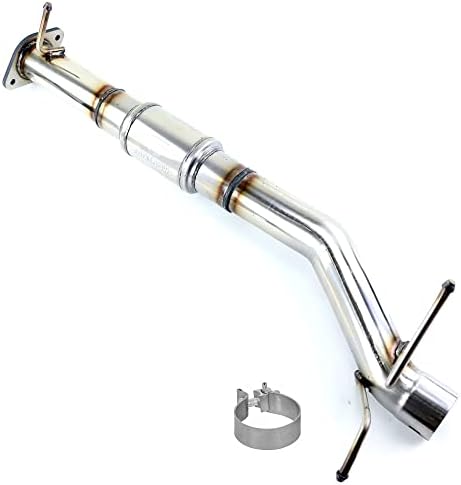
TOTALFLOW 720019 Ram 1500 Direct Fit Exhaust Muffler
$355 price checked August 2026
Read our full Ram 1500 Muffler review
Owners of Japanese crossovers can view our comparison of stainless steel RAV4 mufflers to find the most durable options.

How Do I Measure the Correct Muffler Length?
To establish your required Muffler Length, you must measure the physical space available between the two mounting points on your vehicle’s exhaust pipe. This is not a measurement of the pipe itself, but the “gap” where the muffler body will sit.
You should also consider how proper muffler width affects clearance to ensure your new part fits the chassis perfectly.
Identifying the Mounting Points
Locate the two flange connections or hanger points where the existing muffler is currently attached. Measure the straight-line distance between the center of these two points. This measurement in inches provides the maximum allowable length for a direct-fit replacement.
Accounting for Clearance and Hardware
Once you have the distance between mounting points, subtract approximately 0.5 to 1 inch from that total. This buffer ensures that the muffler body does not press against the chassis, suspension components, or the exhaust pipe itself. If the muffler is too long, it may prevent the hangers from seating correctly or cause the unit to vibrate against the frame.
Finding the Measurement on Product Data
When reviewing technical data for an Auto Muffler, look for the “Length” or “Body Length” specification. Ensure this number refers to the canister itself, not the length of the inlet or outlet piping. If the data provided is “Overall Length,” confirm if this includes the mounting flanges, as those can add 1 to 2 inches to the total footprint.
What Happens if the Muffler Length is Wrong?
Selecting a Muffler Length that is too short or too long creates specific mechanical and acoustic issues that affect the vehicle’s performance and safety.
Risks of a Muffler Length That Is Too Short
A muffler that is significantly shorter than the original unit often lacks the internal volume required to dampen exhaust gases. This results in a much louder exhaust note and can increase the “drone” or resonance inside the cabin. Furthermore, a short muffler may have smaller internal baffles, which can lead to increased backpressure if the engine’s output exceeds the muffler’s capacity to process it.
Before purchasing, learn how to select the correct muffler inlet diameter to match your existing exhaust pipe size.
Risks of a Muffler Length That Is Too Long
If the Muffler Length exceeds the available space between mounting points, the unit may not sit flush against the exhaust pipe. This creates a gap that allows exhaust gases to escape before entering the muffler, leading to potential leaks and a significant increase in noise. In some cases, an oversized muffler can physically strike the vehicle’s suspension or drivetrain components during operation, causing damage or restricted movement.
What to Do if I Fall Between Two Lengths?
If your measurements place you in a “borderline” zone—where a 14-inch muffler might be slightly too long and a 12-inch muffler might be too short—you must prioritize fitment over internal volume.
Prioritizing Fitment Over Volume
In most cases, it is safer to select the slightly shorter Muffler Length. A shorter muffler can be managed by adjusting the hanger positions or using spacers, but a muffler that is physically too long to fit into the chassis cannot be used at all. If the shorter option provides sufficient volume for your engine’s requirements, it is the more reliable choice.
Verifying with a Qualified Installer
Because exhaust systems are subject to specific structural requirements, you should confirm your final measurement with a qualified exhaust technician before ordering. They can identify if specific clearance issues exist that a simple linear measurement might miss. A professional can also confirm if the mounting points are aligned correctly for the specific length you intend to install.