An automotive strut is a structural component of a vehicle’s suspension system that combines a shock absorber and a coil spring into a single unit. It serves as the primary vertical support for a vehicle’s weight while managing the energy generated by the road surface. By integrating these two components, the strut provides a compact and efficient way to maintain tire contact with the ground.
The problem a strut solves is the uncontrolled movement of a vehicle’s body. Without a functional strut, the energy from hitting a bump or a pothole would cause the vehicle to bounce repeatedly. This lack of damping creates instability, reduces the friction between the tires and the road, and compromises the ability of the driver to steer or brake effectively. The strut absorbs this kinetic energy and converts it into heat, stabilizing the vehicle’s ride.
How Does a Strut Work?
A strut works by managing the compression and extension of the vehicle’s weight through a series of mechanical movements. When a tire hits an obstacle, the following sequence occurs:
- The wheel moves upward, compressing the coil spring and pushing the internal piston of the strut inward.
- The strut’s internal damping fluid is forced through small valves or orifices. This resistance slows the upward movement of the wheel, preventing the vehicle from bouncing.
- As the spring pushes back to return the wheel to its original position, the strut provides resistance during the extension phase.
- The internal fluid moves in the opposite direction, controlled by the damping system, to ensure the vehicle settles smoothly rather than oscillating.
Automotive Struts we have reviewed in detail
Prices across these 3 run from $229.99 to $287.41; each one has a full review here.

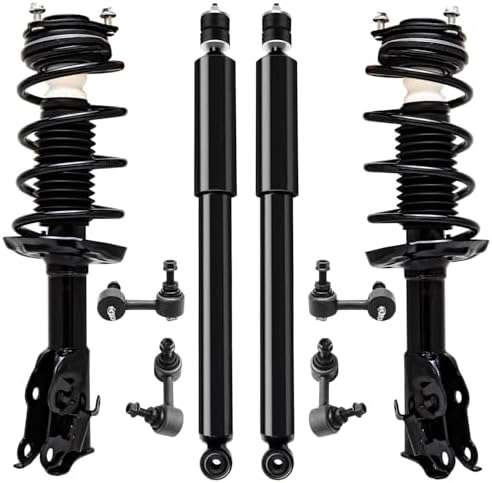
Detroit Axle Struts Shocks Kit Chrysler 200
$284.88 price checked August 2026
Read our full Chrysler 200 Struts review
If you own this specific sedan, see our comparison of front struts for the Chrysler 300M.
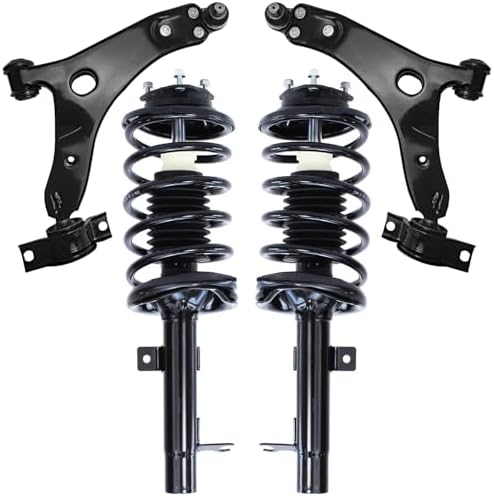
Detroit Axle Front Struts Kit Ford Focus
$287.41 price checked August 2026
Read our full Ford Focus Struts review
Drivers of this classic cruiser can find the best front struts for a Ford Crown Victoria.
Strut Components and Buyer Considerations
Understanding the specific parts of a strut helps determine how different assemblies will affect ride quality and handling. Each component serves a specific role in the damping and support cycle.
Coil Spring Dynamics
The coil spring is the component that supports the actual weight of the vehicle. A stiffer spring provides less body roll during cornering but results in a firmer ride over small bumps. A softer spring improves comfort by allowing more travel but can cause the vehicle to lean more during turns.
Internal Shock Absorber
The shock absorber is the internal cylinder that contains hydraulic fluid and a piston. It is the “damper” of the system. High-quality dampers use refined valving to separate the feeling of small road imperfections from large impacts, allowing for a smoother ride without sacrificing control.
Mounting Hardware and Bushings
Mounting hardware includes the bolts, studs, and bushings that connect the strut to the vehicle’s frame and steering knuckles. The bushings are often made of rubber or polyurethane. Softer rubber bushings provide a quieter ride, while firmer polyurethane bushings offer more direct steering feedback and better durability under heavy loads.
Strut Tower Support
The strut tower is the point on the vehicle’s chassis where the upper mounting point of the strut is attached. The integrity of this connection is vital for maintaining correct geometry. If the tower is not properly reinforced or if the mounting point is loose, the strut cannot effectively manage the forces of the suspension.
What Does Having a New Strut Change in Practice?
Replacing or upgrading a strut changes the way a vehicle reacts to both surface conditions and driver inputs. In many cases, the difference is felt most during high-speed maneuvers or on uneven terrain.
Handling and Braking Performance
A functioning strut keeps the tire pressed firmly against the pavement. When you brake, the strut prevents the front of the car from diving excessively, which keeps the weight distributed more evenly across all four tires. This maintains the contact patch and reduces braking distances. In corners, a responsive strut limits body roll, allowing the vehicle to follow the intended line more accurately.
You can also explore the various types of struts available to see which design fits your needs.
Ride Comfort and Stability
On a daily basis, a high-quality strut reduces the “floaty” feeling of a vehicle. It minimizes the amount of time the car spends bouncing after hitting a speed bump or a dip in the road. This results in a more composed cabin experience where the vehicle feels planted rather than unsettled.
Where the Difference is Not Noted
The difference in strut performance is less noticeable when the vehicle is stationary or moving at very low speeds on perfectly smooth surfaces. If the road is entirely flat, the damping characteristics of the strut have very little opportunity to engage, meaning the ride quality will feel nearly identical regardless of the strut’s specifications.
Who Needs an Automotive Strut?
The need for a new or upgraded strut is determined by the specific condition of the current suspension and the intended use of the vehicle.
Signs of Worn Struts
You need to consider replacing your struts if the vehicle exhibits excessive bouncing after hitting a bump, if the front end of the car “dives” significantly during braking, or if the vehicle feels “loose” or wanders on the highway. Physical signs like oil leaking from the strut body or visible sagging of the vehicle’s height are also clear indicators of failure.
Off-Road and Heavy-Duty Requirements
Drivers who use their vehicles for off-road travel or frequently carry heavy loads require specialized struts. Standard passenger struts are not designed to handle the high-frequency vibrations of rocky terrain or the constant compression of a heavy trailer. In these cases, heavy-duty struts with reinforced housings and specialized valving are required to prevent the suspension from bottoming out or failing under stress.
Daily Driving Requirements
For the average driver, the need for a strut is based on maintenance cycles. Most struts have a finite lifespan and will eventually lose their damping ability as the internal seals wear and the fluid degrades. If the vehicle is used primarily for commuting, a standard replacement that meets the original equipment (OE) specifications is usually sufficient to restore the factory ride quality.
When choosing a strut, it is essential to confirm the specific measurements of your vehicle’s mounting points and travel limits. Because suspension geometry is critical for safety, the installation of a strut is a job for a qualified mechanic who can ensure the alignment remains within safe operating standards.