There are four meaningfully different types of automotive struts defined by their internal valving and mounting architecture. The primary dimension separating these types is the balance between damping consistency and load capacity, which dictates whether a strut is suitable for daily commuting, heavy towing, or off-road articulation.
What are MacPherson Struts?
MacPherson struts are the most common type of front suspension assembly, combining the shock absorber and coil spring into a single structural unit. They are designed for compact packaging where space is at a premium, making them the standard for most front-wheel-drive passenger vehicles.
You should choose a MacPherson strut if you prioritize compact design and predictable handling in a standard passenger car. Because the strut serves as a structural member of the suspension, it provides a predictable geometry that is easy to maintain and replace.
While these struts offer excellent space efficiency, they can limit the amount of independent wheel travel compared to more complex systems. They sit at the most accessible price point in the market, often serving as the baseline for both OEM and aftermarket replacements.
Where these choices show up in our reviews
Prices across these 3 run from $229.99 to $334.22; each one has a full review here.
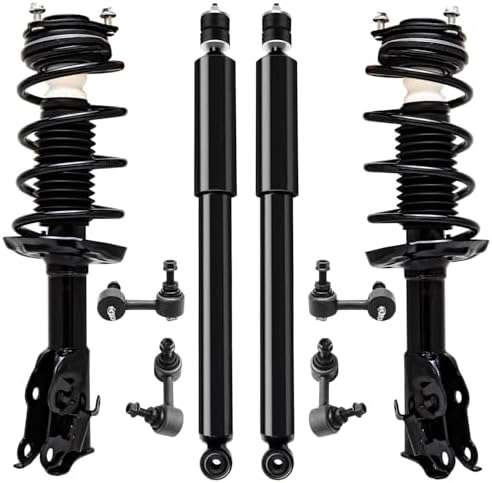
Detroit Axle Front Struts & Coil Springs
$229.99 price checked August 2026
Read our full Front Struts & Coil Springs review
Owners of Ford Focus models can view top-rated front struts for ford focus for better handling.
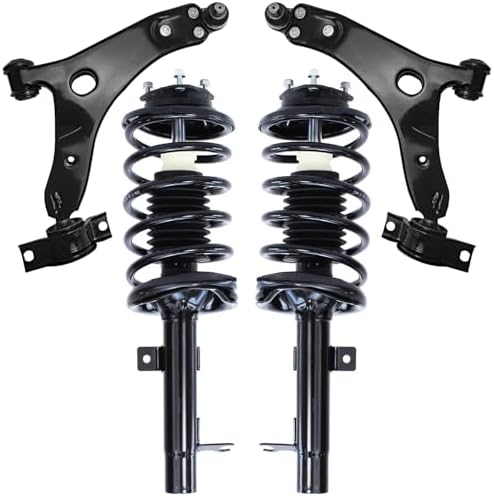

Detroit Axle Front Struts Kit Chrysler Dodge
$334.22 price checked August 2026
To understand the mechanics better, look at how a strut works and functions in detail.
What are Double Wishbone Struts?
Double wishbone struts utilize two A-shaped arms to locate the wheel, allowing for more precise control over camber and caster during suspension travel. This architecture is common in performance vehicles and heavy-duty trucks where maintaining a consistent tire contact patch is critical.
You need a double wishbone setup if your priority is high-performance handling or heavy-duty load stability. This design allows the wheels to move in a more vertical plane, reducing the risk of geometry mismatch during hard cornering or heavy weight distribution.
The trade-off for this superior geometry is increased mechanical complexity and a larger physical footprint in the engine bay or chassis. Consequently, these systems are positioned at a higher price point than standard MacPherson setups due to the extra mounting hardware required.
What are Heavy-Duty Struts?
Heavy-duty struts are defined by reinforced housings and specialized internal valving designed to manage sustained high-load pressures. These are not merely “stronger” versions of standard struts; they are engineered to prevent the fluid from overheating or bypassing under extreme stress.
You should select heavy-duty struts if your vehicle frequently carries heavy payloads, such as towing a trailer or hauling equipment. Standard struts may bottom out or experience rapid degradation under these conditions, whereas heavy-duty versions maintain damping consistency.
You can learn more by viewing common strut terms and specs explained in our guide.
These units give up some of the “supple” ride quality found in passenger-focused struts to provide a firmer, more stable platform. They sit in a mid-to-high price tier, depending on whether they are intended for commercial use or off-road applications.
What are Off-Road Struts?
Off-road struts feature specialized bypass valving and often include external reservoirs to increase oil capacity and cooling. They are designed to handle rapid, high-frequency impacts and deep and sustained compression cycles that would cause a standard strut to fail.
You need off-road struts if you operate in environments with unpredictable terrain, such as rock crawling or high-speed desert running. The external reservoir allows for a larger volume of oil, which prevents the strut from “fading” or losing damping force as it heats up.
The primary compromise is a much stiffer ride on paved roads and a significantly higher price point. These are specialized components where the investment is justified by the need for extreme durability and heat management during technical maneuvers.
Comparison of Strut Types
| Strut Type | Best-Fit Buyer | Main Advantage | Main Compromise |
|---|---|---|---|
| MacPherson Strut | Daily commuters and compact car owners | Compact design and cost-efficiency | Limited wheel travel and geometry control |
| Double Wishbone Strut | Performance enthusiasts and heavy-duty truck owners | Superior camber and caster control | High mechanical complexity and space requirements |
| Heavy-Duty Strut | Towing and hauling operators | High-load durability and stability | Firmer, less comfortable ride quality |
| Off-Road Strut | Overland and off-road enthusiasts | Heat management and high-impact damping | High cost and stiff on-road behavior |
How do you know which strut type you need?
To determine the correct strut type, you must evaluate your primary use case against specific vehicle requirements. If you are looking for a standard replacement for a commuter vehicle and want to maintain the factory feel, a MacPherson strut is the standard choice.
You should consider heavy-duty struts if your vehicle’s Gross Vehicle Weight Rating (GVWR) is frequently reached during towing or hauling. If you find the rear or front end “squatting” or the ride becoming bouncy under load, your current struts likely lack the valving required for high-load stability.
If you intend to travel off-road, check if your current suspension is prone to “packing” or getting hot after several minutes of rough use. If the damping feels like it is disappearing during technical maneuvers, an off-road strut with an external reservoir is the necessary upgrade. For high-performance track use, ensure your vehicle’s mounting points support a double wishbone architecture before seeking that specific geometry.