Core Width refers to the horizontal measurement of a car radiator’s cooling surface, typically expressed in inches (in.). The specific width you require depends entirely on the available clearance within your vehicle’s engine bay and the specific mounting points of your chassis.
Which Core Width suits my specific situation?
| If this is you | The Core Width that suits you | Why |
|---|---|---|
| You are replacing a radiator in a compact car or a vehicle with a narrow engine bay. | The exact width of your current radiator. | Compact engines often have limited side clearance where the radiator sits close to the frame or wheels. |
| You are performing an engine swap into a vehicle with a custom fabrication layout. | A width that fits your custom brackets. | Custom builds allow for non-standard widths, but the unit must align with your specific mounting rails. |
| You own a high-performance vehicle with a large front grille and wide cooling path. | A wider core than the stock unit. | Wider cores provide more surface area for heat dissipation without compromising the fitment of adjacent components. |
| You are replacing a radiator on a heavy-duty truck or SUV with a large cooling requirement. | The maximum width allowed by the front chassis. | Larger vehicles often require maximum surface area to maintain operating temperatures under heavy loads. |
Car Radiators we have reviewed in detail
Prices across these 3 run from $107.78 to $349.26; each one has a full review here.

Mishimoto MMRAD-WRX-01 Performance Aluminum Radiator
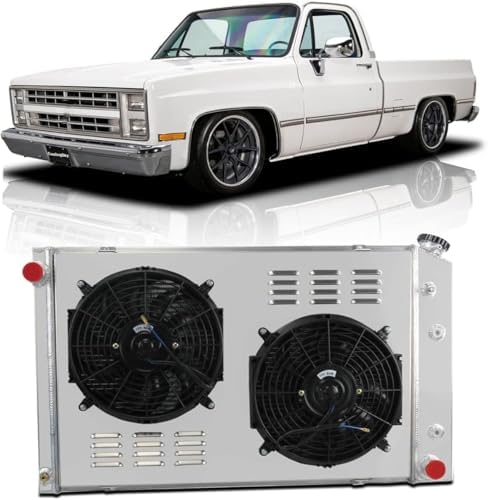
If you own a truck, see our top picks for Chevrolet C/K pickup aluminum radiators.
$349.26 price checked August 2026
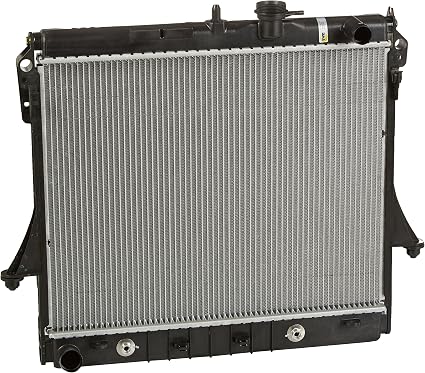
TYC 2855 Replacement Radiator for Hummer
$107.78 price checked August 2026
Read our full TYC 2855 Radiator review
You should also understand how to choose your radiator inlet diameter for a proper fit.
How do I measure the correct Core Width before ordering?
To establish your correct Core Width, you must measure the available space between the mounting points of your vehicle’s radiator support. Use a metal tape measure to check the distance from the inner edge of the left mounting rail to the inner edge of the right mounting rail.
Identify the mounting points
Locate the two primary points where the radiator brackets bolt to the vehicle frame. Measure the horizontal distance between these two points. This measurement defines the maximum allowable width for the radiator’s mounting tabs.
Check side clearance and obstructions
Measure the distance from the radiator’s outer edges to the surrounding components, such as the cooling fans, frame rails, or the front bumper. Ensure there is at least a small margin of space so the radiator can slide into position without hitting adjacent parts.
Read the manufacturer’s dimensions
When looking at specifications for a new radiator, identify the “Core Width” or “Width” measurement in inches. This number represents the width of the actual cooling core, not necessarily the width of the outer and inner tanks, which may be slightly wider.
What happens if the Core Width is too small or too large?
A Core Width that is too small or too large creates specific mechanical and thermal issues that affect the cooling system’s reliability.
Proper flow depends on knowing how to select your radiator outlet diameter.
Risks of a Core Width that is too narrow
If the Core Width is smaller than your vehicle’s requirements, the radiator will have less surface area to dissipate heat. This can lead to higher operating temperatures, especially during heavy towing or high-speed driving. A narrow core may struggle to move enough coolant through the internal baffles to keep the engine at a safe temperature.
Risks of a Core Width that is too wide
A Core Width that exceeds the available space in the engine bay will physically prevent installation. If the radiator is too wide, it may press against the cooling fans, preventing them from spinning freely, or it may hit the frame rails. This can cause the radiator to sit at an angle, leading to uneven coolant flow and potential damage to the mounting brackets.
What should I do if my measurement falls between two Core Widths?
If your measurements indicate that your requirement falls between two standard Core Widths, you must prioritize the smaller of the two options to ensure a proper fit. A radiator that is slightly narrower than the maximum possible space will still function effectively as long as it meets the thermal needs of the engine.
Prioritize fitment over extra surface area
In cases where you are between sizes, choosing the smaller width ensures the unit can be mounted securely. A radiator that is too tight to fit into the bay cannot be installed, whereas a slightly smaller unit can be centered or offset to align with the existing mounting points.
Verify mounting alignment
Before making a final decision on a borderline measurement, confirm that the mounting tabs of the smaller radiator align with your vehicle’s frame. If the mounting points do not line up, you may need to consult a professional installer to determine if custom brackets are required to secure the unit.
Consult a qualified installer
Because radiator fitment depends on precise clearances, you should have a qualified mechanic or technician verify your measurements before you place an order. A professional can confirm if the chosen Core Width provides sufficient clearance for the cooling fans and surrounding engine components.