Outlet Diameter refers to the internal width of the ports where coolant enters and exits the car radiator. The correct measurement is determined entirely by the diameter of the existing hose fittings on your specific vehicle.
Which Outlet Diameter Suits Your Vehicle?
| If this is you | The Outlet Diameter that suits you | Why |
|---|---|---|
| You are replacing a radiator on a standard passenger car or SUV. | 1.0 in. to 1.25 in. | These are the industry standards for most consumer vehicle cooling systems. |
| You own a heavy-duty truck or a high-performance diesel engine. | 1.5 in. | Larger engines require higher flow volumes that necessitate wider ports. |
| You are installing a specialized racing radiator for a custom build. | 1.5 in. to 2.0 in. | Custom cooling circuits often prioritize maximum flow over standard hose availability. |
| You are working on a vintage vehicle with narrow cooling lines. | 0.75 in. to 1.0 in. | Older designs often used smaller diameters that are incompatible with modern large-port units. |
Where these choices show up in our reviews
From $107.78 to $246: the 3 in this category we have reviewed in full.
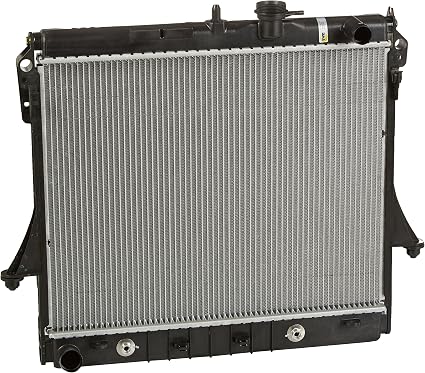
TYC 2855 Replacement Radiator for Hummer
$107.78 price checked August 2026
Read our full TYC 2855 Radiator review
If you are on a budget, see our guide to affordable Toyota Camry radiators to find options under $150.

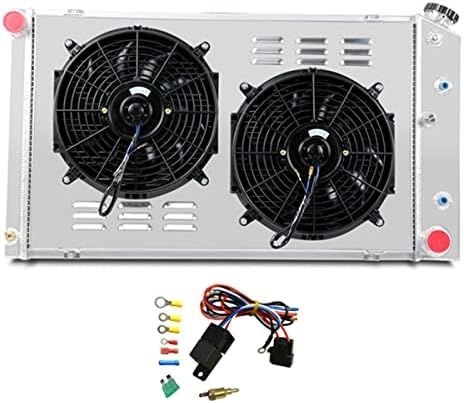
3 Row Aluminum Radiator Kit for Chevy Chevelle
Enthusiasts can find our comparison of Subaru WRX STI cooling units to boost engine performance.
$236 price checked August 2026
How Do I Measure My Radiator Outlet Diameter?
To determine your correct outlet diameter, you must measure the inner diameter of the existing hose connection point on your car radiator.
Locate the two primary ports on the radiator—usually one at the top and one at the bottom. Use a digital caliper or a pair of large calipers to measure the internal opening of the metal neck. If the hose is currently attached, you may need to remove it to get an accurate reading of the metal port itself.
The measurement is typically found in inches (in.). If you cannot remove the hose, measure the outer diameter of the hose and subtract the wall thickness of the rubber. However, measuring the metal port directly is the only way to ensure a perfect fit, as hose sizes can vary slightly between manufacturers.
You should also learn about determining the correct radiator inlet diameter to ensure a proper fit.
Check the manufacturer’s identification plate on the radiator if it is still installed. Some manufacturers list the inlet and outlet diameters in the technical specifications. If no plate exists, the physical measurement of the port is the only reliable data point.
What Happens if the Outlet Diameter is Wrong?
What if the Outlet Diameter is too small?
If the outlet diameter is too small, the radiator creates a flow restriction. This means the coolant cannot move through the core fast enough to dissipate the heat generated by the engine.
In use, this manifests as the engine reaching operating temperature too quickly or the cooling fans running constantly at high speeds. In extreme cases, a restricted flow can lead to localized hotspots in the engine block, potentially causing the coolant to boil and create pressure that may damage seals.
What if the Outlet Diameter is too large?
If the outlet diameter is too large, the primary issue is a physical fitment failure. The existing radiator hoses will not be able to secure onto the larger ports of the new radiator.
Because the hose cannot seat properly, it will not create a liquid-tight seal. This leads to immediate coolant leaks at the connection point. If the hose is forced onto a port that is too large, it may slip off entirely while the vehicle is in motion, leading to a rapid loss of coolant and immediate engine overheating.
Make sure to understand how to measure radiator core width before finalizing your purchase.
What Should I Do if My Measurement is Between Two Sizes?
If your measurement falls between two standard sizes, such as 1.1 in., you must choose the size that allows for a secure, leak-proof connection with standard hoses.
The safest approach is to select the smaller of the two standard sizes that is still larger than your measured port. For example, if your port is 1.05 in., a 1.25 in. port is often the next standard step up. This allows you to use a slightly larger hose with a proper clamp, ensuring a tight seal.
You should avoid choosing a port that is too small to accommodate your existing hose, as this would require cutting and shortening the hose, which can weaken the rubber and increase the risk of a burst. If the measurement is very close to a standard size, such as 1.24 in., always choose the exact matching standard of 1.25 in.
Before ordering, confirm the hose’s outer diameter. If the hose is significantly larger than the port, you may need to purchase new hoses to match the radiator’s outlet diameter. Proper fitment requires that the hose’s inner diameter matches the radiator’s port, and the hose’s outer diameter allows for a secure clamp grip.
Because sizing errors can lead to immediate leaks or engine damage, confirm your measurements twice before finalizing a purchase. Most retailers have specific return policies regarding sizing, so ensuring the measurement is correct before the radiator arrives is the most reliable way to avoid a failed installation.