When shopping for a car radiator, most technical specifications serve as critical indicators of thermal performance and physical fitment. Load-bearing terms include core construction materials, row counts, and mounting dimensions, as these dictate how much heat the unit can move and whether it will actually bolt onto your vehicle. Conversely, marketing vocabulary such as “extreme-duty,” “high-flow,” or “ultra-performance” often lacks a standardized metric and serves only to describe a manufacturer’s subjective goal. You should ignore these adjectives and focus on the specific material grades, measurements, and manufacturing standards listed in the technical data.
Car Radiator Core Construction and Material Specs
- Aluminum – This material offers high thermal conductivity and is lightweight, making it the standard for modern high-performance and replacement radiators. Aluminum is generally preferred over heavier materials for its ability to dissipate heat quickly.
- Copper-Brass – This traditional material provides excellent heat transfer but is significantly heavier and more prone to corrosion in certain environments. It is less common in modern replacement markets but remains a benchmark for heavy-duty durability.
- Core Thickness – This measurement dictates the depth of the cooling fins and tubes. A thicker core allows for more surface area and higher heat capacity, which is beneficial for high-output engines.
- Fin Density – This refers to the number of cooling fins per inch of the radiator surface. Higher fin density increases the surface area available for air contact, though it must be balanced against airflow resistance.
- Tube Diameter – This measures the width of the internal channels where coolant flows. Larger diameters can reduce internal friction and pressure drops, which is a priority for high-flow cooling systems.
- Material Grade (e.g., 3003 or 6061 Aluminum) – These numbers indicate the specific alloy used in the radiator construction. Higher-grade alloys offer better resistance to pressure and heat-induced warping over the life of the component.
Where these choices show up in our reviews
These 3 have their own full review on this site, and run from $127.50 to $399.87.
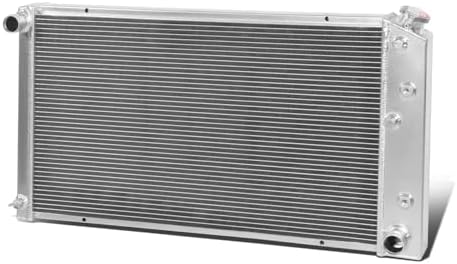
Auto Dynasty 3-Row Tri-Core Full Aluminum Radiator
$160 price checked August 2026
If you are restoring a vintage muscle car, see our guide to the best radiator for classic chevelle el camino.
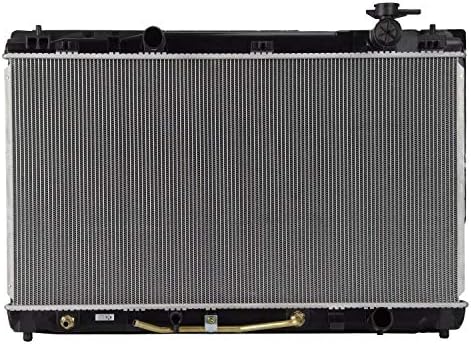
Replacement Radiator for 2007-2011 Camry L4 2.4L 2.5L
Owners of high-performance Japanese imports can view our comparison of the best performance radiator for subaru wrx sti.
$127.50 price checked August 2026
Read our full Camry Radiator review
You can learn more about the different designs by exploring the various types of radiators available.

Mishimoto MMRAD-F2D-03 Aluminum Radiator
$399.87 price checked August 2026
Read our full Mishimoto MMRAD-F2D-03 review
For a foundational understanding of cooling systems, see how a radiator works and its basic functions.
Car Radiator Physical Dimensions and Fitment
- Row Count (1-Row, 2-Row, 3-Row) – This indicates how many layers of tubes and fins the radiator contains. A 3-row radiator has more surface area than a 1-row unit, making it more capable of cooling high-heat applications.
- Core Height – This is the vertical measurement of the radiator’s cooling surface. You must ensure the height does not interfere with the hood or other engine bay components.
- Core Width – This is the horizontal measurement of the cooling surface. A wider core provides more surface area but requires sufficient clearance between the radiator and the side rails of the engine bay.
- Mounting Tab Spacing – These are the specific measurements between the bolt holes on the radiator frame. Precise spacing is required to ensure the radiator aligns with the vehicle’s mounting brackets without modification.
- Inlet and Outlet Diameter – These measurements specify the size of the hose connections. They must match your vehicle’s existing cooling hoses or the diameters of the adapters you intend to use.
- Core Thickness (Depth) – This is the measurement from the front of the radiator to the back. A deeper core provides more cooling capacity but requires more clearance between the radiator and the engine block.
Car Radiator Flow and Performance Metrics
- Flow Rate – This measures the volume of coolant the radiator can move per minute. A higher flow rate is necessary for engines that generate high amounts of heat in a short period.
- Pressure Rating – This is the maximum PSI the radiator can withstand before the seams or welds fail. You need a rating that exceeds your vehicle’s cooling system pressure, which is usually determined by the thermostat and radiator cap.
- Heat Exchange Efficiency – This is a calculated metric of how much thermal energy is transferred from the coolant to the air. Higher efficiency means the radiator can cool the engine faster using less surface area.
- Turbulence Baffling – This refers to internal structures that force coolant to move in a specific pattern. Better baffling ensures that every drop of coolant comes into contact with the cooling fins, improving efficiency.
- Corrosion Resistance – This indicates the material’s ability to withstand the chemicals in engine coolant over time. High-quality aluminum and brass alloys are chosen specifically to prevent internal scaling and pinhole leaks.
Commonly Confused Radiator Terms
Buyers often confuse several terms because they sound similar but describe different physical attributes of the cooling system.
- Core vs. Frame – The core is the actual heat-exchanging part (the fins and tubes), while the frame is the outer structure that holds the core and provides the mounting points. You need to measure both to ensure fitment.
- Aluminum vs. Copper – While both are metals, aluminum is primarily valued for its weight-to-heat-transfer ratio, whereas copper is valued for its raw thermal conductivity. Most modern replacements favor aluminum for its ease of manufacturing and weight.
- Row Count vs. Core Thickness – While related, row count refers to the number of layers (e.g., 3-row), while core thickness is the actual measurement in inches or millimeters. A 3-row radiator will always have a greater core thickness than a 1-row radiator.
- Inlet vs. Outlet – These are the two points where coolant enters and leaves the radiator. While they are often the same size, they may be positioned differently on the top or sides of the unit depending on the vehicle’s hose routing.