When researching automotive struts, you will encounter a mix of critical engineering data and vague marketing terminology. Load-bearing terms—such as spring rates, damping coefficients, and mounting dimensions—dictate how the vehicle handles and whether the part will physically fit your car. Marketing vocabulary, such as “smooth ride,” “sporty feel,” or “premium finish,” describes subjective experiences that cannot be measured. To make a correct purchase, you should prioritize the technical specifications in the listings over descriptive adjectives. If a listing lacks specific measurements or material standards, it is often because the manufacturer cannot guarantee a precise fit or performance level.
Strut Performance and Capability Terms
Strut performance terms define how the component manages the weight of the vehicle and the forces of the road. These values determine the balance between comfort and handling.
- Spring Rate – This measures the amount of force required to compress the spring by one inch; a higher spring rate provides firmer handling and less body roll, while a lower rate offers a softer, more compliant ride.
- Damping Coefficient – This value represents the resistance the strut provides against the compression and rebound of the spring; higher damping reduces “bouncing” but can feel stiffer over sharp bumps.
- Load Rating – This indicates the maximum weight the strut assembly is designed to support; you must ensure the rating exceeds your vehicle’s curb weight plus any additional cargo or passengers.
- Rebound Control – This refers to the strut’s ability to prevent the spring from extending too quickly after a compression; better rebound control prevents the vehicle from feeling “floaty” at high speeds.
- Compression Damping – This is the resistance provided when the strut is being pushed upward by a bump; higher values allow the vehicle to absorb larger impacts without bottoming out.
- Travel Distance – This is the total distance the strut can move through its stroke; a longer travel distance allows the suspension to absorb larger obstacles without hitting the mechanical limits of the assembly.
Where these choices show up in our reviews
These 3 have their own full review on this site, and run from $216.58 to $334.22.
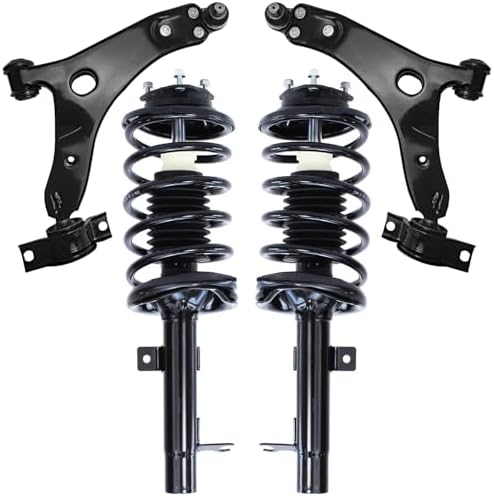
Detroit Axle Front Struts Kit Ford Focus
$287.41 price checked August 2026
Read our full Ford Focus Struts review
If you own this sedan, you can compare the best front struts for chrysler 300m to find your ideal upgrade.


Detroit Axle Front Struts Suspension Kit Honda Accord
Owners of these sedans should view the best front struts for ford crown victoria to improve their ride quality.
$216.58 price checked August 2026
Strut Physical and Material Specifications
Physical specifications describe the construction materials and the actual dimensions of the hardware. These are the primary requirements for ensuring the part is durable and compatible with your vehicle’s chassis.
- Strut Housing Material – This identifies the metal used for the main body, such as 10-series steel or aluminum; higher-grade alloys offer better heat dissipation and structural integrity under high stress.
- Coating Type – This refers to the surface treatment, such as powder coating or zinc plating, which prevents corrosion; a high-quality coating extends the lifespan of the strut in wet or salty environments.
- Piston Diameter – This is the width of the internal rod that moves through the fluid; a larger diameter allows for more oil flow, which is often necessary for heavy-duty or off-road applications.
- Mounting Eyelet Diameter – This is the measurement of the hole where the strut bolts to the vehicle; this must match your factory specifications exactly to ensure a secure fit.
- Strut Length – This is the total height of the assembly from the top mount to the bottom mount; even a few millimeters of difference can cause a geometry mismatch that leads to improper wheel alignment.
- Bushing Material – This identifies the rubber or polyurethane used in the mounting points; polyurethane is stiffer and holds its shape longer, while rubber provides a quieter, more compliant connection.
Strut Compatibility and Fitment Terms
Compatibility terms ensure that the strut will physically bolt onto your vehicle and maintain the correct geometry. These are the most critical specs to verify before ordering.
You can also explore the different types of struts to see which design suits your specific vehicle needs.
- OE (Original Equipment) Fitment – This indicates that the strut is designed to replace the factory part without modifications; “OE-style” means it mimics the original dimensions but may use different internal valving.
- Mounting Points – These are the specific locations where the strut attaches to the frame or subframe; if these do not align with your vehicle’s factory holes, the strut cannot be installed.
- Camber and Caster Alignment – These are the angles at which the wheels sit; a strut with the wrong length or mounting angle will cause these values to drift outside of safe operating limits.
- Shock Tower Clearance – This is the amount of space available between the top of the strut and the vehicle’s body; you must confirm the strut does not hit the fender or frame during full compression.
- Bump Stop Position – This refers to where the rubber stopper sits in the travel path; an incorrectly positioned bump stop can limit your suspension’s ability to absorb large impacts.
- Strut Nut Thread Pitch – This is the specific thread size for the mounting hardware; using a strut with a different pitch than your vehicle’s factory studs will prevent installation.
Terms That Are Often Confused
Buyers often confuse several terms that sound similar but serve different functions in the suspension system.
Strut vs. Shock Absorber – A shock absorber is a component that only dampens movement, while a strut is a structural part of the suspension that serves as the upper mounting point for the spring and the wheel assembly. In many front-wheel-drive cars, the strut is the main load-bearing unit, whereas the shock is a separate, standalone cylinder.
Spring Rate vs. Damping – Spring rate is the “strength” of the metal coil, which determines how much the car sits and how it reacts to weight; damping is the “thickness” of the fluid resistance, which determines how quickly the car stops bouncing after hitting a bump.
Aftermarket vs. OE – Aftermarket refers to any part not made by the vehicle’s original manufacturer; while “Aftermarket” can mean a cheaper replacement, it can also refer to high-performance upgrades that offer different handling characteristics than the factory “OE” parts.
Strut Assembly vs. Strut Cartridge – A strut assembly includes the spring, mount, and shock body as one unit; a strut cartridge is a replaceable internal core that can be swapped out without replacing the outer housing or the spring.