Your vehicle must use a 315MHz frequency and a direct (OEM) TPMS system to use the IM1001 TPMS Sensor. Because these sensors replace the physical valve stem to send pressure data directly to the dashboard, they will not work on vehicles that use an indirect system relying on wheel speed sensors (ABS-based).
The IM1001 TPMS Sensor operates on a 315MHz frequency, which is a primary standard for many vehicle manufacturers. We selected this specific model for our comparison because it functions the same as OE parts and includes pre-programmed logic to simplify the pairing process. Identifying the correct frequency is critical because a sensor operating on 433MHz will not be recognized by the vehicle’s computer even if it fits the wheel. Because these sensors are “plug and play” in terms of programming, you do not need a specialized OBD-II tool to marry the sensor to your VIN, but you must follow the standard relearn procedure specified by your car manufacturer to register the new hardware. The unit features a 7-year battery life under normal usage and includes a 7-year limited warranty on parts.
What to Check Before Buying the IM1001 TPMS Sensor
Verifying these technical details before ordering ensures the hardware can communicate with your vehicle’s electronic control unit.
- Confirm your vehicle uses a direct TPMS system with dedicated valve stems rather than an indirect system that uses wheel speed sensors.
- Verify that your vehicle’s ECU is designed to communicate with the 315MHz frequency.
- Check your owner’s manual for the specific “relearn” or “registration” procedure required to sync new sensors.
- Ensure your vehicle’s valve stem thread pitch and nut size match standard passenger car specifications, as heavy-duty trucks may use different threads.
- Check your local region’s telecommunications regulations to ensure 315MHz sensors are permitted for use in your country.
Comparing the IM1001 TPMS Sensor to Other Options
The IM1001 TPMS Sensor is a valve-stem-mounted device that monitors air pressure and transmits that data wirelessly to your dashboard. This specific model is a strong choice for buyers who want a pre-programmed solution that mimics the behavior of the original equipment. If you own a vehicle that uses a newer BLE (Bluetooth Low Energy) protocol, such as certain Tesla models, or if your vehicle requires a 433MHz frequency, you should look for a different sensor type. Buyers with specialized commercial vehicles may also need to seek out sensors with non-standard thread pitches that differ from the standard passenger car fitment found on this model.
If you prefer a different brand, you can view our comparison of the best Autel MX Sensor for tire pressure.
If your vehicle uses a 315MHz direct system and you want a pre-programmed sensor that functions like the factory part, you should choose the IM1001 TPMS Sensor.
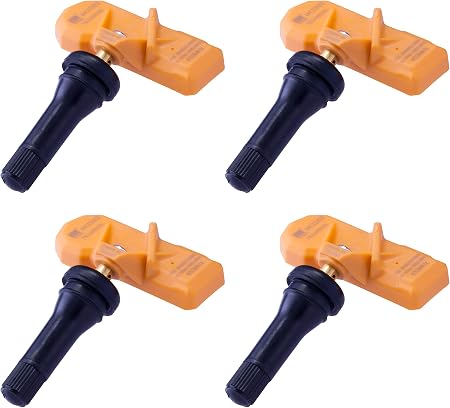
IM1001 TPMS Sensor
For those with specific makes, see our breakdown of the best replacement TPMS sensor for GM Ford and Toyota.
$112.80 price checked August 2026