Our Top 3 Picks
You are not here to run a research project. You are here to find a Tire Pressure Sensor that works and get on with it – these 3 are the ones we picked.
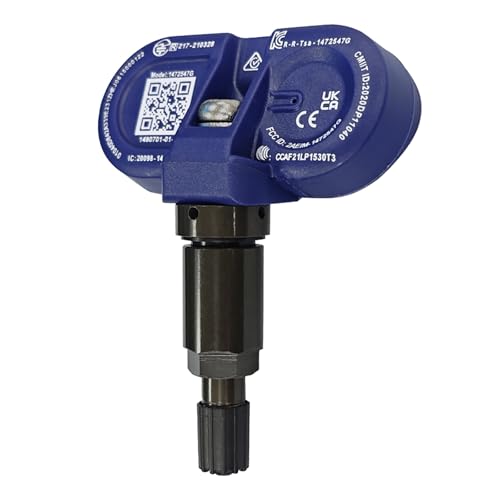
#1 – Tesla BLE Bluetooth TPMS Sensor
Best for: owners of Tesla Model 3, Y, X, or S models manufactured from 2020 onwards.
- Bluetooth Low Energy (BLE) protocol
- $114.95 (mid)
- 4.4 rating from 127 ratings
- Editorial score: 7.9/10
Communication Protocol: Bluetooth Low Energy (BLE)
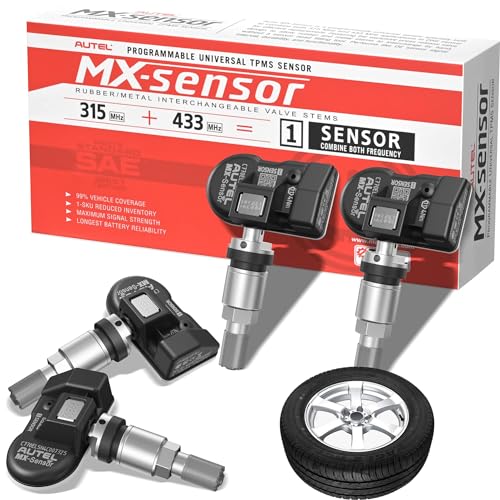
#2 – Autel MX-Sensor 2 in 1 Press-in
Best for: users requiring a high-coverage, dual-frequency sensor compatible with Autel programming tools.
- Dual 315MHz and 433MHz frequencies
- $109 (mid)
- 4.4 rating from 348 ratings
- Editorial score: 8.8/10
Operating Frequency: 315MHz+433MHz · Programming Capacity: 100 Clone-able
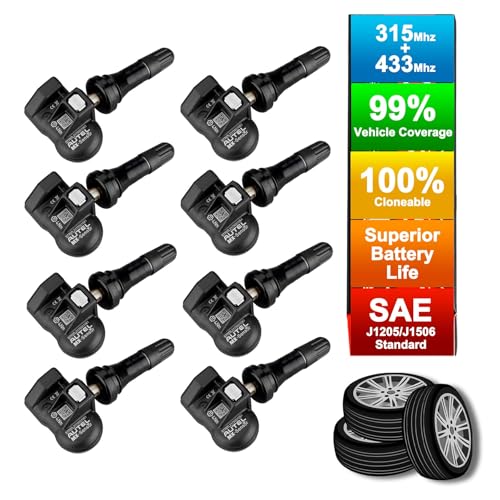
#3 – Autel Mx Programmable TPMS Sensor
Best for: those seeking a universal 1-SKU solution that covers 99 vehicle sensor replacement demands.
- 315MHz + 433MHz dual frequency
- $109 (mid)
- 4.6 rating from 268 ratings
- Editorial score: 9/10
Operating Frequency: 315MHz + 433MHz
If you are specifically looking at the Autel lineup, see our comparison of the best Autel MX Sensor for tire pressure.
How Car Forum World picked: we started from the 96 most-reviewed tire pressure sensor listings in our retail dataset, removed duplicates, accessories and off-category products, and 50 qualified. The picks on this page were selected from those 50 candidates against this topic’s requirements. Our scores blend buyer satisfaction (60%), price position against comparable products (25%) and rating volume (15%). Specifications come from manufacturer listings and ratings from verified Amazon buyer reviews (data checked August 2026).
Our Verdict and How We Chose
The Tesla BLE Bluetooth TPMS Sensor is the best BLE TPMS Sensor for Tesla Model 3 because it offers automatic connection and real-time data transmission without requiring manual programming or calibration.
Selecting a tire pressure sensor that correctly communicates with a Tesla’s specific architecture can be difficult, as choosing the wrong frequency or protocol results in a “sensor not found” error. This mismatch prevents the vehicle from displaying accurate real-time pressure data, leaving you without critical safety information.
The Tesla BLE Bluetooth TPMS Sensor solves this by using a dedicated Bluetooth Low Energy (BLE) protocol that connects automatically once mounted. If you prefer a versatile option for multiple vehicle types, the Autel MX-Sensor 2 in 1 Press-in offers dual 315MHz and 433MHz frequencies, while the Autel Mx Programmable TPMS Sensor provides high industry coverage for various makes.
At Car Forum World we evaluated the tire pressure sensor options we track against this topic’s criteria. The selected models range from $109 to $114.95, with a median price of $114.95 across the 10 products in our comparison.
What the data says
- Top pick: Tesla BLE Bluetooth TPMS Sensor at $114.95 (Communication Protocol: Bluetooth Low Energy (BLE)).
- Also picked: Autel MX-Sensor 2 in 1 Press-in at $109; Autel Mx Programmable TPMS Sensor at $109.
- We compared 10 Tire Pressure Sensors, from $109 to $499, median $114.95.
- Best buyer rating in the comparison: Autel Mx Programmable TPMS Sensor at 4.6/5 from 268 ratings.
Full Comparison Table
| Product | Price | Rating | Operating Frequency |
|---|---|---|---|
| Tesla BLE Bluetooth TPMS Sensor | $114.95 | 4.4 (127 ratings) | Not stated |
| Autel MX-Sensor 2 in 1 Press-in | $109 | 4.4 (348 ratings) | 315MHz+433MHz |
| Autel Mx Programmable TPMS Sensor | $109 | 4.6 (268 ratings) | 315MHz + 433MHz |
| Autel 2in 1MX-Sensor Dual Frequency TPMS | $109 | 4.3 (225 ratings) | 315MHz + 433MHz |
| Autel MX-Sensor | $109 | 4.1 (136 ratings) | 315MHz +433MHz |
| Autel MX Sensor | $109 | 4.4 (66 ratings) | 315MHz/433MHz |
| Autel MaxiTPMS MX Sensors | $499 | 4.5 (61 ratings) | 315 MHz and 433 MHz |
| Autel MaxiTPMS 315MHz/433MHz 2 in 1 with MX-Sensor | $127.96 | 4.4 (60 ratings) | 315MHz+433MHz |
| Autel MX Sensors | $499 | 4.6 (37 ratings) | 315MHz/433MHz |
| Autel MX-Sensor | $499 | 4.8 (23 ratings) | 315MHz/433MHz |
Prices are approximate and move frequently – check the current price before deciding. “Not stated” means the manufacturer listing does not give that figure – we do not estimate it.
The Tesla BLE Bluetooth TPMS Sensor offers the strongest price-to-spec ratio because it provides native BLE integration for Tesla models without requiring manual programming.
The Picks Reviewed in Detail
The 3 picks below run from $109 to $114.95, reviewed in rank order.
Tesla BLE Bluetooth TPMS Sensor
The Tesla BLE Bluetooth TPMS Sensor is our primary recommendation for the Model 3 because it is purpose-built for the Bluetooth Low Energy (BLE) protocol required by newer Tesla models. Unlike traditional RF sensors, this unit integrates directly with the vehicle’s existing system.
What we like: This sensor uses the Infineon SP490 chip to provide real-time tire pressure data and features a battery life of over 8 years. It eliminates the need for external apps or manual calibration, as it connects automatically to the vehicle once mounted.
Keep in mind: This sensor is restricted to specific production dates, supporting only Tesla Model 3 units from October 2020 to the present.
Does it work with the Tesla app or do I need a separate phone app? The sensor transmits data directly to the vehicle, which then displays the information within the native Tesla interface; no separate phone app is required.
What is the difference in price between a basic sensor and one with high-frequency updates? While the price for this BLE sensor is around $114.95, the value lies in the “real-time” transmission spec, which provides more frequent updates than standard interval-based sensors.
Autel MX-Sensor 2 in 1 Press-in
The Autel MX-Sensor 2 in 1 Press-in serves as a high-performance alternative for those who prefer a programmable, multi-frequency sensor that can be used across various vehicle makes.
What we like: This sensor supports both 315MHz and 433MHz frequencies and features a 100 clone-able capacity for versatile replacement. It includes interchangeable rubber and metal valve stems to accommodate different wheel types.
Keep in mind: This sensor requires specific Autel TPMS programming tools, such as the TS408S or TS601, for initial setup.
Does it work with the Tesla app or do I need a separate phone app? This sensor uses traditional RF frequencies (315MHz/433MHz) rather than BLE, meaning it does not integrate with the Tesla app and requires a compatible receiver.
What is the difference in price between a basic sensor and one with high-frequency updates? At the $109 mark, this sensor provides high signal strength and dual-frequency coverage, which ensures reliable data transmission across 99 vehicle sensor demands.
Autel Mx Programmable TPMS Sensor
The Autel Mx Programmable TPMS Sensor is a versatile choice for users seeking a single-SKU solution that covers a wide range of vehicle requirements through high-frequency compatibility.
What we like: The Autel Mx Programmable TPMS Sensor combines 315MHz and 433MHz frequencies into one unit to provide the highest industry vehicle coverage. It features a press-in design and a lower sensor weight compared to many standard alternatives.
Keep in mind: Like the other Autel model, this is a programmable sensor and is not a “plug-and-play” BLE solution for the Tesla ecosystem.
Does it work with the Tesla app or do I need a separate phone app? This sensor operates on 315MHz and 433MHz frequencies; it does not support the Tesla app’s BLE requirements.
What is the difference in price between a basic sensor and one with high-frequency updates? This sensor is priced at $109 and offers “maximum signal strength” and dual-frequency support, providing a more reliable data feed than single-frequency basic sensors.
You might also consider these high-performance ITM 315mhz TPMS Tire Pressure Sensors.
Explore alternative methods for monitoring tire pressure if hardware sensors aren’t your preferred route.
The Specs That Decide This Purchase
Tesla Native BLE Compatibility
Tesla Native BLE Compatibility is the primary requirement for the Model 3, as these vehicles use Bluetooth Low Energy protocols instead of traditional RF frequencies. The Tesla BLE Bluetooth TPMS Sensor is the only option in our comparison that provides an automatic connection to the vehicle once mounted. While the Autel MX-Sensor 2 and Autel Mx Programmable TPMS Sensor cover 99 vehicle sensor replacement demands using dual 315MHz and 433MHz frequencies, they do not support the specific BLE protocol required for native Tesla integration. If you own a Model 3 from October 2020 onwards, you must prioritize a BLE-specific sensor to ensure the vehicle’s computer can decode the pressure data.
Battery Life Cycles
Battery life cycles determine how often you will need to perform a sensor replacement. For long-term ownership, look for a lifespan of at least 8 years to minimize maintenance frequency. The Tesla BLE Bluetooth TPMS Sensor is rated for over 8 years of battery life. The Autel MX-Sensor 2 and Autel Mx Programmable TPMS Sensor both list superior battery reliability, but they do not provide a specific year count in their specifications. You should confirm the specific year rating with the manufacturer before purchasing to ensure the sensor meets your expected maintenance interval.
Ease of DIY Programming
Ease of DIY Programming depends on whether the sensor requires external tools or automatic syncing. The Tesla BLE Bluetooth TPMS Sensor requires no programming or calibration, as it is designed to connect automatically to the vehicle. In contrast, the Autel MX-Sensor 2 and Autel Mx Programmable TPMS Sensor require professional-grade tools like the TS408S or TS501 PRO for setup. Because these Autel sensors are designed for shop use and “clone-able” functionality, you would need to ensure you have the correct diagnostic scan tools or programming hardware before attempting a DIY installation.
Sensor Housing Durability
Sensor housing durability is measured by the operating temperature range and the physical construction of the valve stem. For reliable performance at high speeds and in extreme climates, a sensor should withstand a wide thermal range. The Tesla BLE Bluetooth TPMS Sensor is rated to operate between -40 F and +257 F, ensuring the signal does not drop out in extreme environments. The Autel MX-Sensor 2 features a press-in design with interchangeable rubber and metal valve stems to accommodate different wheel types. If the data does not specify a temperature range for a specific model, you must verify the operating limits to ensure the housing can withstand your local climate.
Understanding the technology is key, so view the different categories of tire pressure sensors.
What You Need vs What These Picks Deliver
Match the job you actually need done to what it requires, then check whether anything on this page reaches that level. Where nothing does, the row says so.
| What you want to do | What that needs | What clears it here |
|---|---|---|
| Get a sensor that works with Tesla’s Bluetooth system | Bluetooth Low Energy (BLE) protocol | Tesla BLE Bluetooth TPMS Sensor |
| Replace a dead sensor on a non-Tesla vehicle | 315MHz and 433MHz dual frequency | MX-Sensor 2 in 1 Press-in, Mx Programmable TPMS Sensor |
| Replace a sensor on a vehicle with a proprietary ID | 100 clone-able capacity | MX-Sensor 2 in 1 Press-in |
| Replace a sensor on a vehicle with a unique proprietary signal | OEM-specific proprietary encoding | OEM replacement sensors |
Thresholds are the levels this category is generally held to, not manufacturer claims. Check them against your own workload before buying.
Who Buys Tire Pressure Sensors, and What It Really Costs
Who buys a Tire Pressure Sensor, and what each one needs
- Tesla Model 3 owners — BLE protocol compatibility to ensure the vehicle’s computer can decode the signal
- DIY automotive mechanics — Programmable sensors to avoid a programming lockout when syncing to a specific vehicle ID
- Fleet managers — High-quality aftermarket sensors that match the signal range of OE sensors
- Tesla enthusiasts — BLE sensors that provide a seamless replacement for factory-installed hardware
What to budget for on top of the Tire Pressure Sensor
- TPMS programming tool — required to sync the sensor ID to the vehicle’s computer
- Tire mounting equipment — necessary to safely seat the tire onto the rim with the sensor installed
- Valve stem extensions — needed to access the sensor for manual pressure checks or maintenance
What you can leave out of the budget
- External pressure gauges — unnecessary once the BLE sensors are synced to the vehicle’s dashboard
- Generic RF sensors — useless if the vehicle requires a specific BLE protocol
Where this kind of product is normally sold
- Specialized automotive electronics retailers — provides technical support and verification of protocol compatibility
- Online marketplaces — offers competitive pricing but requires the buyer to verify frequency and protocol specs
- Automotive parts wholesalers — provides bulk pricing for those purchasing multiple sensors for a fleet
To better understand technical specifications, check out our guide to tire pressure sensor terms and specs.
Buying Questions Answered
Will these sensors trigger a “TPMS Service” warning on my dashboard?
The Tesla BLE Bluetooth TPMS Sensor is designed for automatic connection to the vehicle once mounted, which avoids the “sensor not found” errors common with frequency mismatches. Because this specific sensor uses the Bluetooth Low Energy (BLE) protocol required by the Tesla Model 3, it integrates with the factory system to provide real-time data without triggering persistent service warnings.
Is the sensor compatible with the Model 3 valve stem?
The Autel MX-Sensor 2 in 1 Press-in includes both rubber and metal valve stems to ensure a proper fit for various wheel configurations. You should confirm your specific wheel’s clearance before ordering, as the press-in design is intended to replace standard OE sensors and provide a secure seal.
Who Should Skip These Tire Pressure Sensors
If you are looking for a sensor that requires a specific proprietary encoding not covered by these BLE or dual-frequency standards, these options may not work for your vehicle. You need to confirm your vehicle’s specific communication protocol before ordering, as a frequency mismatch or protocol incompatibility will result in a “sensor not found” error.