Our Top 3 Picks
We went through 10 Tire Pressure Sensor options to build this list. These 3 are the ones worth your time.
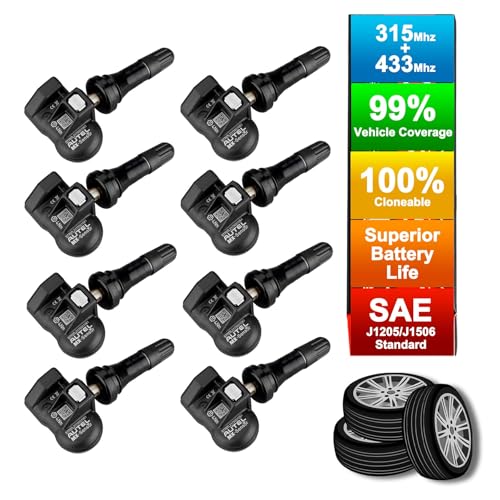
#1 – Autel Mx Programmable TPMS Sensor
Best for: shops needing a single-SKU inventory solution for maximum vehicle coverage.
- Dual 315MHz + 433MHz frequency support
- $109 (entry)
- 4.6 rating from 268 ratings
- Editorial score: 9/10
Operating Frequency: 315MHz + 433MHz
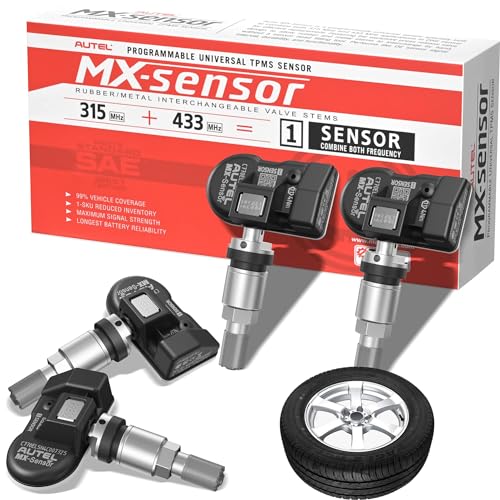
#2 – Autel MX-Sensor 2 in 1 Press-in
Best for: technicians requiring high-volume cloning and simultaneous programming capabilities.
- 100 clone-able capacity
- $109 (entry)
- 4.4 rating from 348 ratings
- Editorial score: 8.8/10
Operating Frequency: 315MHz+433MHz · Programming Capacity: 100 Clone-able
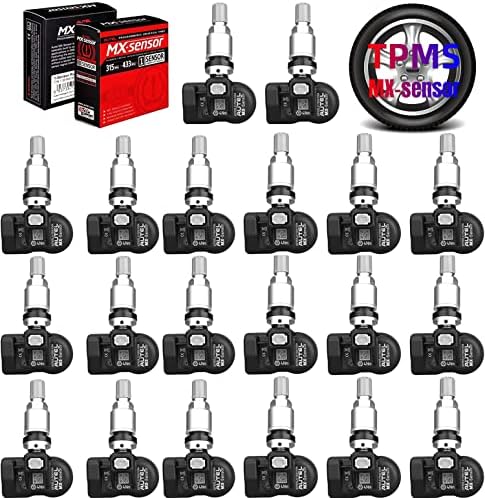
#3 – Autel MaxiTPMS MX Sensors
Best for: high-volume operations requiring a bulk supply of premium sensors.
- 20-piece metal sensor pack
- $499 (premium)
- 4.5 rating from 61 ratings
- Editorial score: 6.5/10
Operating Frequency: 315 MHz and 433 MHz · Programming Capacity: 100 cloneable
You can find a detailed technical breakdown in our full review of the Autel 1MX-Sensor.
Selecting the right signal depends on how to choose your operating frequency.
How Car Forum World picked: we started from the 96 most-reviewed tire pressure sensor listings in our retail dataset, removed duplicates, accessories and off-category products, and 50 qualified. The picks on this page were selected from those 50 candidates against this topic’s requirements. Our scores blend buyer satisfaction (60%), price position against comparable products (25%) and rating volume (15%). Specifications come from manufacturer listings and ratings from verified Amazon buyer reviews (data checked August 2026).
The Verdict, and the Basis for It
The Autel Mx Programmable TPMS Sensor is the best Autel MX Sensor for Tire Pressure because it combines 315MHz and 433MHz frequencies into a single sensor for maximum vehicle coverage.
Choosing the wrong tire pressure sensor can lead to a “sensor not found” error or a complete lack of pressure readings if the frequencies do not match your vehicle’s system. This mismatch occurs when a 315MHz sensor is paired with a 433MHz system, rendering the hardware useless for monitoring.
The Autel Mx Programmable TPMS Sensor solves this by supporting both primary frequencies, making it a versatile choice for most shops. You should consider the Autel MX-Sensor 2 in 1 Press-in if you need a 100 clone-able capacity, or opt for the Autel MaxiTPMS MX Sensors for a bulk 20-piece package.
We evaluated the tire pressure sensor options we track against this topic’s criteria at Car Forum World. The prices for these selections range from $109 to $499, with a median price of $127.96 across our comparison.
For a deeper look at the specs, see how the IM1001 TPMS Sensor performs.
Before you read the rest
- Top pick: Autel Mx Programmable TPMS Sensor at $109 (Operating Frequency: 315MHz + 433MHz).
- Also picked: Autel MX-Sensor 2 in 1 Press-in at $109; Autel MaxiTPMS MX Sensors at $499.
- We compared 10 Tire Pressure Sensors, from $109 to $499, median $127.96.
- Best buyer rating in the comparison: Autel Mx Programmable TPMS Sensor at 4.6/5 from 268 ratings.
Full Comparison Table
| Product | Price | Rating | Operating Frequency | Operating Frequency |
|---|---|---|---|---|
| Autel Mx Programmable TPMS Sensor | $109 | 4.6 (268 ratings) | 315MHz + 433MHz | 315MHz + 433MHz |
| Autel MX-Sensor 2 in 1 Press-in | $109 | 4.4 (348 ratings) | 315MHz+433MHz | 315MHz+433MHz |
| Autel MaxiTPMS MX Sensors | $499 | 4.5 (61 ratings) | 315 MHz and 433 MHz | 315 MHz and 433 MHz |
| Autel 2in 1MX-Sensor Dual Frequency TPMS | $109 | 4.3 (225 ratings) | 315MHz + 433MHz | 315MHz + 433MHz |
| Autel MX Sensor | $109 | 4.4 (66 ratings) | 315MHz/433MHz | 315MHz/433MHz |
| Autel MaxiTPMS 315MHz/433MHz 2 in 1 with MX-Sensor | $127.96 | 4.4 (60 ratings) | 315MHz+433MHz | 315MHz+433MHz |
| Autel MaxiTPMS MX Sensor | $127.96 | 5.0 (14 ratings) | 315MHz + 433MHz | 315MHz + 433MHz |
| Autel MX-Sensor | $119 | 5.0 (4 ratings) | 315MHz 433MHz | 315MHz 433MHz |
| Autel MX-Sensor | $229 | 5.0 (5 ratings) | 315MHz + 433MHz | 315MHz + 433MHz |
| Autel MX-Sensor | $499 | 4.8 (23 ratings) | 315MHz/433MHz | 315MHz/433MHz |
Prices are approximate and move frequently – check the current price before deciding. “Not stated” means the manufacturer listing does not give that figure – we do not estimate it.
The Autel Mx Programmable TPMS Sensor offers the strongest price-to-spec ratio because it provides dual-frequency coverage for $109.
Each Pick, Reviewed
The 3 picks below run from $109 to $499, reviewed in rank order.
Autel Mx Programmable TPMS Sensor
The Autel Mx Programmable TPMS Sensor made this list because it offers a high review volume and a 4.6 rating, providing a reliable entry point for those needing dual-frequency coverage without a high price point.
What we like: This sensor supports both 315MHz and 433MHz frequencies, which covers 99 vehicle solutions and prevents frequency mismatch errors. The 1-SKU inventory solution simplifies stock requirements for shops needing a versatile replacement for various makes and models.
Keep in mind: This model is designed for general replacement and may not offer the high-volume cloning capacity found in the more expensive MX sensor packages.
Autel MX-Sensor 2 in 1 Press-in
We selected the Autel MX-Sensor 2 in 1 Press-in for its balance of high-volume ratings and its specific “100 clone-able” capacity, making it a versatile middle-ground option.
What we like: This sensor utilizes an 88 chip and supports 100 clone-able configurations, allowing it to replace 98 different OE sensors. It is compatible with a wide range of tools, including the TS408S and MS906 Pro-TS, for versatile programming.
Keep in mind: While it covers 99 vehicle sensor replacement demands, you must confirm your specific vehicle’s protocol is compatible with the 88 chip architecture before ordering.
Autel MaxiTPMS MX Sensors
The Autel MaxiTPMS MX Sensors earned a spot on this list as the premium choice, offering high-capacity cloning and a 20-piece bulk package for heavy-duty requirements.
What we like: These sensors are 100% cloneable and allow for the programming of up to 16 sensors in a single session. The package includes 20 metal MX-Sensors, providing a high-volume solution for large-scale replacements.
Keep in mind: At the $499 price point, this option is intended for high-volume users or workshops and may be over-priced for a single-vehicle repair.
Do these sensors work with my specific vehicle make and model?
Compatibility depends on whether your vehicle uses 315MHz, 433MHz, or a proprietary BLE protocol. While these sensors cover 99 vehicle solutions, you must verify your vehicle’s specific frequency and protocol before purchase. If your vehicle uses a proprietary encoding that the 88 chip or standard frequencies cannot decode, the sensor will not pair. You should check your vehicle’s requirements or consult a technician to confirm the correct frequency and protocol for your specific make and model.
How much does the professional installation cost compared to the hardware price?
The hardware prices for these sensors range from $109 to $499, but these figures do not include labor. Professional installation costs vary significantly by region and shop, often adding a substantial markup to the total cost of ownership. You should request a labor quote from a qualified installer to determine the total cost before purchasing the hardware.
What Separates One Tire Pressure Sensor From the Next
Frequency Compatibility
Frequency compatibility requires a sensor that supports both 315MHz and 433MHz to ensure it works across different vehicle makes. The Autel Mx Programmable TPMS Sensor and the Autel MX-Sensor 2 in 1 Press-in both support these dual frequencies, which helps prevent “sensor not found” errors caused by frequency mismatches. If a sensor only supports one frequency, it will fail to communicate with any vehicle using the other standard. Because many modern vehicles use different protocols, we selected these dual-frequency options to provide the widest possible coverage for a workshop.
Installation Method
Installation method for these sensors involves a press-in design, which allows for a faster replacement than some threaded alternatives. The Autel Mx Programmable TPMS Sensor and the Autel MX-Sensor 2 in 1 Press-in both feature press-in designs to simplify the physical mounting. You should confirm your vehicle’s wheel well clearance before ordering, as a professional installer will need to ensure the press-in fit is secure. While these designs facilitate quick swaps, the actual installation should be performed by a qualified technician to ensure proper seating.
Battery Life Cycle
Battery life cycle is determined by the sensor’s ability to maintain a signal in extreme temperatures and regular use. While the specific years of life are not listed in the data, the Autel MaxiTPMS MX Sensors are designed to provide functionality equivalent to or surpassing OEM sensors, which typically target a multi-year lifespan. You should check the manufacturer’s specific voltage requirements for your vehicle’s system to ensure the battery’s chemistry is compatible with your local climate’s temperature swings.
Programming Ease
Programming ease is defined by the sensor’s ability to be “clonable” and its compatibility with common diagnostic tools. The Autel MaxiTPMS MX Sensors and the Autel MX-Sensor 2 in 1 Press-in are both 100% cloneable, meaning they can replicate the ID of the original equipment. The Autel MX-Sensor 2 in 1 Press-in can be programmed with tools like the TS408S or MK808S-TS, while the MaxiTPMS sensors can be programmed while already installed on the wheel. This capability is what separated the field in our comparison, as it allows for much faster synchronization with the vehicle’s computer.
Sensor Housing Style
Sensor housing style refers to the physical construction and the type of valve stem included. The Autel Mx Programmable TPMS Sensor and the Autel MX-Sensor 2 in 1 Press-in both include interchangeable metal and rubber valve stems to suit different rim types. Choosing the correct housing material depends on your vehicle’s requirements; metal stems are often preferred for high-pressure applications. All three options provide the necessary hardware to ensure the sensor remains secure and functional in different wheel configurations.
If these sensors aren’t right for you, explore the alternatives to a tire pressure sensor.
Understanding your options is easier when you see the different types of tire pressure sensors explained.
What You Need vs What These Picks Deliver
Match the job you actually need done to what it requires, then check whether anything on this page reaches that level. Where nothing does, the row says so.
| What you want to do | What that needs | What clears it here |
|---|---|---|
| Replace a sensor on a vehicle using 315MHz or 433MHz frequencies | 315MHz and 433MHz dual frequency | Mx Programmable, MX-Sensor 2 in 1, MaxiTPMS MX |
| Replace a sensor on a vehicle with a high-volume sensor requirement | 20 sensors per package | MaxiTPMS MX |
| Replace a sensor on a vehicle with a standard cloneable ID | 100 clone-able capacity | Mx Programmable, MX-Sensor 2 in 1, MaxiTPMS MX |
Thresholds are the levels this category is generally held to, not manufacturer claims. Check them against your own workload before buying.
Who Buys Tire Pressure Sensors, and What It Really Costs
Who buys a Tire Pressure Sensor, and what each one needs
- Independent tire technicians — need the Autel MX-Sensor standard for high-quality, programmable aftermarket compatibility
- Tesla owners — need BLE (Bluetooth Low Energy) compatible sensors instead of traditional RF frequencies
- Fleet managers — need sensors that avoid Frequency Mismatch to ensure consistent pressure readings across different vehicle makes
- Performance car hobbyists — need sensors that bypass Protocol Incompatibility to ensure the vehicle’s computer can decode the signal
- Used car dealers — need cloneable sensors to avoid Programming Lockout when syncing new hardware to existing vehicle IDs
What to budget for on top of the Tire Pressure Sensor
- OBDII programming tool — required to sync the sensor ID to the vehicle’s computer
- TPMS tool kit — needed to physically remove and replace the old hardware
- Replacement valve cores — needed if the original cores are damaged during sensor installation
What you can leave out of the budget
- External pressure gauges — unnecessary once the sensors are successfully synced to the dashboard
- Generic RF transmitters — useless because they cannot bypass proprietary vehicle encoding
Where this kind of product is normally sold
- Specialized automotive parts retailers — offers technical support and ensures the correct 315MHz or 433MHz frequency for the vehicle
- Online marketplaces — provides competitive pricing but requires the buyer to verify protocol compatibility independently
- Authorized service centers — provides professional installation and warranty handling but at a higher service premium
Questions Buyers Ask Before Choosing
Which Autel MX sensor should I choose?
The Autel Mx Programmable TPMS Sensor is a versatile option that combines 315MHz and 433MHz frequencies into a single unit to provide high vehicle coverage. If you need a high-volume solution for a workshop, the Autel MaxiTPMS MX Sensors include a 20-piece pack and offer 100% cloneable functionality for around $499. For those seeking a balance of 100 clone-able capacity and dual-frequency support, the Autel MX-Sensor 2 in 1 Press-in serves as a middle-ground choice at the $109 mark.
Do I need a new TPMS module for these sensors?
These sensors are designed to replace broken or low-battery OE sensors, meaning they typically work with your existing vehicle TPMS module. Because the Autel MX-Sensors are 100% cloneable and support 99 vehicle solutions, they are intended to sync with the car’s current system rather than requiring a full hardware overhaul.
Do I need a special tool to program these sensors?
You will need a compatible diagnostic scan tool to sync these sensors to your vehicle’s computer. The Autel MX-Sensor 2 in 1 Press-in, for example, is programmable with specific tools like the TS408S, TS508WF, TS501 PRO, and TS601, as well as various diagnostic scan tools like the MK808S-TS.
Which sensors offer the best cloning capacity?
The Autel Mx Programmable TPMS Sensor and the Autel MaxiTPMS MX Sensors both offer 100 clone-able capacity for high-volume replacement needs. This ensures the sensors can be programmed to match the specific ID of the original equipment (OE) sensors they are replacing.
Who Should Skip These Tire Pressure Sensors
If you need a sensor that supports BLE (Bluetooth Low Energy) protocols, none of the options we evaluated provide this capability. While 315MHz and 433MHz are standard for most vehicles, newer models, specifically Tesla models, often require BLE instead of traditional RF frequencies.
You should look for specialized BLE-compatible sensors if your vehicle requires that specific protocol. For those seeking specific vehicle brand comparisons, you can view best replacement TPMS sensor for GM Ford and Toyota.