There are two primary types of clutch flywheels that define the market: solid flywheels and dual mass flywheels (DMF). The core distinction between these types lies in how they manage engine vibrations and torque loads. While a solid flywheel provides a single, rigid mass of metal, a dual mass flywheel uses a specialized spring system to decouple the engine’s rotational inertia from the transmission’s load. This mechanical difference determines whether a vehicle feels smoother during low-speed operation or offers higher durability under heavy-duty stress.
What are solid flywheels?
A solid flywheel is a single, continuous piece of metal, typically cast iron or steel, that serves as the mounting surface for the clutch disc. It relies on its own physical mass to provide inertia and smooth out the engine’s power pulses. This design is the standard for heavy-duty applications, high-torque diesel engines, and performance vehicles where durability is the primary requirement.
Benefits of solid flywheel designs
Solid flywheels offer superior longevity because they lack the internal moving parts and springs found in other designs. Because the mass is unified, there are no internal components to fatigue or fail over time. This makes them the preferred choice for heavy-duty towing, commercial use, and high-torque environments where the drivetrain faces constant, heavy loads.
Trade-offs of solid flywheel designs
The primary compromise of a solid flywheel is the transmission of engine vibrations directly into the drivetrain. Because the flywheel is rigidly connected to the crankshaft, any harmonic vibration from the engine is felt through the gear shift and the pedal. This can lead to a harsher “bite” during engagement and a less refined driving experience in passenger cars, particularly those with small, high-revving engines.
In terms of cost, solid flywheels generally sit at a lower price point relative to dual mass options. Since they are simpler to manufacture and lack complex internal dampening mechanisms, they represent a more economical choice for vehicles that do not require high-frequency vibration suppression.
Where these choices show up in our reviews
Prices across these 3 run from $122.45 to $226.29; each one has a full review here.

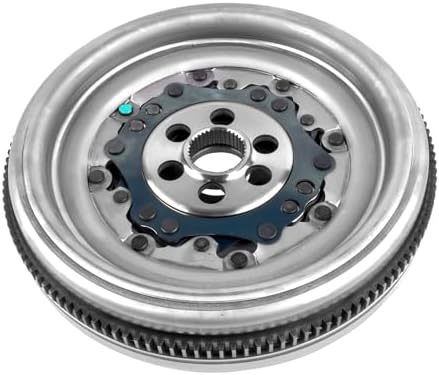

What are dual mass flywheels (DMF)?
A dual mass flywheel (DMF) consists of two separate friction surfaces connected by internal springs or dampers. This design allows the two halves of the flywheel to move slightly independently of each other. It acts as a mechanical buffer, absorbing engine vibrations before they can reach the clutch and the gearbox.
Benefits of dual mass flywheels
Dual mass flywheels provide a significantly smoother driving experience, particularly in modern passenger cars with small-displacement engines. By dampening harmonic vibrations, the DMF reduces drivetrain shudder and allows for a much smoother engagement of the clutch. This is the standard for modern front-wheel-drive and many rear-wheel-drive passenger vehicles where refinement is a priority.
Trade-offs of dual mass flywheels
The trade-off for this smoothness is a reduction in long-term durability compared to solid designs. Because the internal springs and pivot points are subject to constant movement and heat cycles, they are prone to fatigue. If the internal dampening components wear out or break, the flywheel can develop a “clicking” sound or cause severe vibration. Consequently, these are rarely used in high-torque applications where the forces would exceed the spring’s capacity.
Dual mass flywheels sit at a higher price point relative to solid flywheels. The complexity of the internal dampening mechanism and the precision required in manufacturing make these units more expensive to produce and replace.
Comparison of clutch flywheel types
| Flywheel Type | Best-Fit Buyer | Main Advantage | Main Compromise |
|---|---|---|---|
| Solid Flywheel | Heavy-duty, diesel, or high-torque users | High durability and longevity | Higher vibration transmission |
| Dual Mass Flywheel (DMF) | Passenger cars seeking smooth operation | Superior vibration dampening | Lower lifespan under high load |
How to tell which clutch flywheel type you need?
To determine which flywheel type fits your situation, you should evaluate the specific torque requirements and the intended use of the vehicle. If you are operating a vehicle that frequently carries heavy loads, such as a commercial truck or a heavy-duty towing vehicle, a solid flywheel is the standard requirement. These applications prioritize the ability to withstand high-torque shearing forces over the refinement of the gear change.
Check your vehicle’s primary application
Identify if the vehicle is intended for high-torque performance or smooth commuting. If the engine is a high-torque diesel or a heavy-duty industrial engine, the mechanical stress often exceeds the limits of a dual mass system. In these cases, a solid flywheel provides the necessary structural integrity to prevent premature drivetrain failure.
Check your vibration requirements
Evaluate how much vibration is acceptable during operation. If you are driving a modern passenger car and notice drivetrain shudder or a harsh clutch bite, a dual mass flywheel is the standard solution to isolate the engine’s harmonics. If the vehicle is already designed for heavy work and vibration is not a primary concern, the simplicity of the solid flywheel is the more durable choice.
Confirm your vehicle’s specifications
Before making a decision, you must confirm the specific flywheel requirements for your engine. Because flywheel types are often dictated by the original equipment (OE) specifications, using a flywheel type not intended by the manufacturer can lead to harmonic vibration or premature wear. You should verify the required flywheel weight and spline count with a qualified mechanic to ensure the replacement matches the vehicle’s engineering requirements. Installation of these components is a job for a qualified technician to ensure correct torque and alignment.