A tire pressure sensor is an electronic device installed inside a vehicle’s tire that monitors the air pressure and, in many cases, the temperature of the tire. It acts as a continuous monitoring system, providing real-time data to the vehicle’s dashboard or a remote display to ensure the tires remain inflated to the manufacturer’s specifications.
These sensors exist to solve the problem of fluctuating tire pressure, which can be caused by changes in ambient temperature, gradual air seepage, or punctures. Maintaining the correct pressure is critical because under-inflated tires increase rolling resistance and heat buildup, while over-inflated tires can lead to reduced grip and uneven wear. By providing constant data, these sensors remove the need for frequent manual pressure checks and provide an early warning system for potential safety hazards like slow leaks or sudden blowouts.
How does a tire pressure sensor work?
A tire pressure sensor works by converting physical pressure into a digital signal that the vehicle’s computer can interpret and display.
- The internal pressure sensor detects the amount of force exerted by the air inside the tire against the sensor’s diaphragm.
- A transducer converts this physical force into an electrical signal, which is then processed by an onboard microchip.
- The microchip determines the current pressure and, if equipped, the internal temperature of the air.
- The sensor uses a radio frequency (RF) transmitter to broadcast this data at set intervals, typically every few seconds or minutes.
- A receiver, usually located in the vehicle’s wheel well or dashboard, picks up the RF signal and sends it to the instrument cluster.
- The dashboard displays the pressure for each tire, usually in pounds per square inch (PSI) or bar, often accompanied by a visual alert if a tire falls below a specific threshold.
Tire Pressure Sensors we have reviewed in detail
Prices across these 3 run from $109 to $109; each one has a full review here.
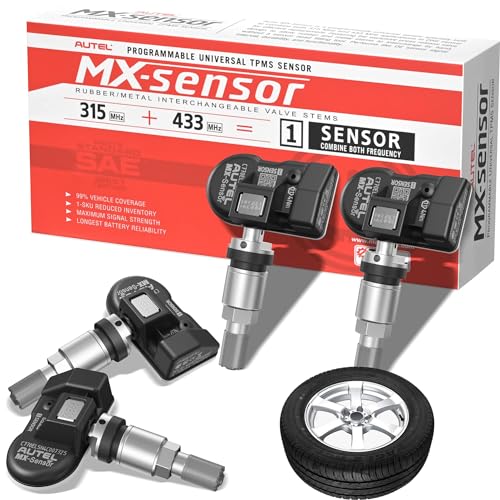

IM4168 TPMS 433MHz Aluminum Stem Tire Sensor
If you are looking to install your own hardware, see our guide to the best programmable TPMS sensor for DIY installation.
$109 price checked August 2026
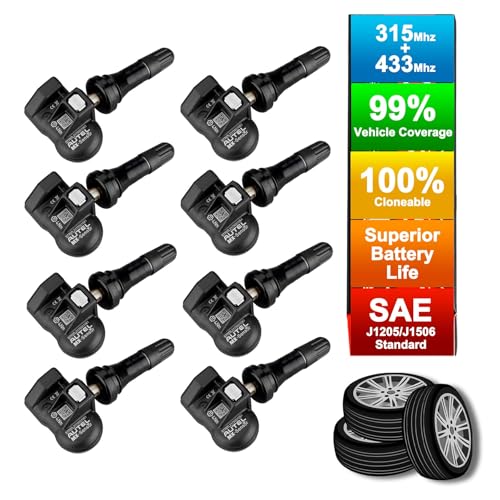
Tire pressure sensor components and standards
Several technical components and communication standards determine how a tire pressure sensor performs and stays functional over the life of a tire.
Radio Frequency (RF) Standards
The radio frequency (RF) is the specific wavelength used to transmit data from the tire to the vehicle. The two primary frequencies are 315MHz and 433MHz. Choosing the wrong frequency results in a frequency mismatch, where the vehicle’s computer cannot see the sensors at all. Many modern vehicles, specifically Tesla models, have moved toward Bluetooth Low Energy (BLE) protocols, which require specific compatible sensors rather than standard RF hardware.
You can also learn about common tire pressure sensor terms and specs in plain language.
OE vs Aftermarket Tiers
Original Equipment (OE) sensors are the units installed by the manufacturer at the factory. These are often the benchmark for signal range and battery longevity. Aftermarket sensors are alternatives used for replacements or for vehicles not originally equipped with a system. High-quality aftermarket sensors, such as those meeting the Autel MX-Sensor standard, are designed to be programmable, allowing them to sync with the vehicle’s specific identification system.
Programming and Cloning
Programming refers to the process of syncing a new sensor’s unique ID with the vehicle’s computer. If a sensor is not “programmable” or “cloneable,” it cannot be paired with the car’s existing system, leading to a programming lockout. This is a critical distinction for buyers: a sensor must be compatible with the vehicle’s specific communication protocol, not just the frequency.
What does having a tire pressure sensor change in practice?
Having a tire pressure sensor changes the maintenance routine from a reactive task to a proactive monitoring system.
Safety and Wear Benefits
In practice, these sensors provide immediate alerts for slow leaks that might otherwise go unnoticed for days. By maintaining optimal pressure, you ensure even tread wear across the tire’s surface, which can extend the total lifespan of the tire. The system also provides a safety buffer against “cold” tires, where the pressure drops significantly in winter temperatures, by alerting the driver before the tire reaches a dangerous level of under-inflation.
Limitations of the technology
A tire pressure sensor does not change the physical grip of the tire or its ability to handle heavy loads; it only monitors the air inside. It also does not provide information on the structural integrity of the tire’s sidewall or the tread depth. If a tire has a large enough puncture to cause an immediate blowout, the sensor may not have enough time to transmit a warning before the tire fails. Furthermore, the sensor only provides data when the vehicle is moving or when the system performs a periodic “ping” of the wheels.
Who needs a tire pressure sensor?
The need for a tire pressure sensor is defined by the vehicle’s existing equipment and the driver’s specific usage conditions.
Newer Vehicles and Requirements
If you drive a vehicle manufactured in the last decade, it likely already has a tire pressure monitoring system (TPMS) installed. In this case, you only need sensors if you are replacing a damaged unit or if the vehicle was sold without them. You must confirm the specific frequency (315MHz, 433MHz, or BLE) and the required programming protocol before purchasing a replacement.
Older Vehicles and Upgrades
If you own an older vehicle that lacks a factory monitoring system, you may choose to install an aftermarket kit. This is beneficial if you frequently drive in extreme climates where temperature swings significantly affect tire pressure, or if you frequently tow heavy loads that put extra stress on the tires. For most standard daily drivers in temperate climates, the benefit of adding a system to a vehicle that didn’t come with one is lower than the cost of the installation and hardware.