Most buyers only need a Programming Capacity of 4 to 8 for standard passenger vehicles. This range covers the total number of wheels on a single vehicle, ensuring every sensor can be synced to the system.
Recommended Programming Capacity by Use Case
| Use Case | Recommended Programming Capacity | Why this number |
|---|---|---|
| Standard Passenger Car | 4 to 8 | Covers the four wheels on a standard car or eight for vehicles with dual rear wheels. |
| Light Commercial Van | 4 to 8 | Standard coverage for four wheels, though some heavy-duty vans may require more if they have auxiliary trailers. |
| Heavy Duty Truck (Single) | 8 to 12 | Accounts for dual rear wheels and potential additional monitoring points on heavy-duty chassis. |
| Fleet Management | 16 to 32 | Allows for the simultaneous programming of multiple vehicles or a large fleet of small units from a single interface. |
| Specialized Multi-Vehicle Setup | 32+ | Required for high-volume commercial operations where a single device must manage a large inventory of sensors. |
Tire Pressure Sensors we have reviewed in detail
From $109 to $119.99: the 3 in this category we have reviewed in full.
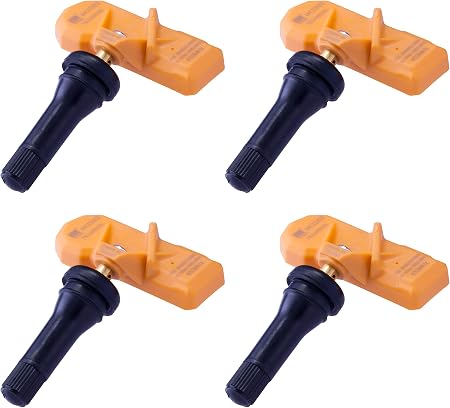
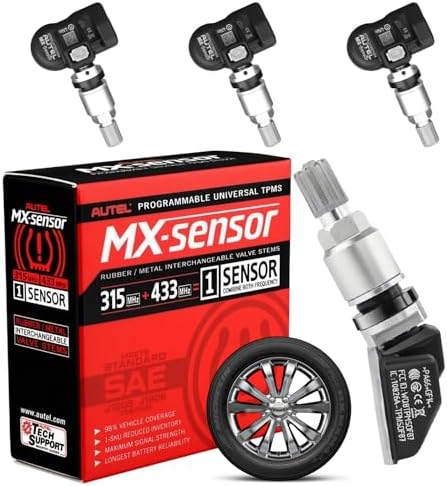

What happens if you go under or overbuy Programming Capacity?
Risks of Under-Provisioning
Under-provisioning occurs when the Programming Capacity is lower than the number of sensors you need to install. If you have a vehicle with eight wheels but only have a capacity for four, the system will reach its limit before the final sensors are registered.
If you are doing the work yourself, see our guide to the best programmable TPMS sensor for DIY installation.
In this scenario, you cannot complete the installation without purchasing a new device or a different model. This creates a hard stop in the workflow, requiring a second trip to a supplier or a professional technician to re-sync the hardware. It effectively renders the existing sensors useless until the capacity limit is expanded.
The Real Cost of Over-Buying
Over-buying occurs when you select a high Programming Capacity that far exceeds your actual needs, such as choosing a 32-count capacity for a single passenger car. While it provides a buffer, it often results in a higher initial price point for a feature you will never utilize.
The cost of over-buying is a direct waste of budget. Because Programming Capacity is a fixed hardware or software limit, you are paying for “empty slots” that remain unused. For a home user or a small shop, paying for fleet-level capacity to manage four wheels is a poor allocation of funds that does not improve the performance of the sensors.
What is the most common mistake with Programming Capacity?
Focusing on Capacity instead of Frequency
The most common mistake buyers make is prioritizing a high Programming Capacity while ignoring the frequency requirements of their specific vehicle. A high Programming Capacity is useless if the frequency does not match the vehicle’s requirements.
If your vehicle operates on a 433MHz frequency and you purchase a high-capacity device that only supports 315MHz, the capacity count is irrelevant. The system will fail to detect any sensors because of a frequency mismatch. You should optimize for the correct frequency first, then select the minimum Programming Capacity required to cover your wheels.
Misunderstanding Programming Logic
Another mistake is assuming that “Programming Capacity” refers to the number of vehicles a sensor can be used on, rather than the number of sensors a device can manage at once. A sensor’s ability to be “cloned” or “programmed” is a separate technical standard from the capacity of the tool used to set it up.
Ensure you understand whether the tool allows for “cloning” (copying an existing sensor’s ID) or “programming” (creating a new ID). If you need to replace a sensor in a vehicle with a locked system, the ability to clone is often more important than the total count of sensors the tool can hold.
How does Programming Capacity interact with other deciding specs?
Frequency and Protocol Constraints
Programming Capacity interacts directly with frequency and protocol standards. A device’s capacity is only accessible if the communication protocol is compatible with the vehicle’s computer. Even if a device has a high capacity, proprietary encoding in newer vehicles can prevent the tool from “seeing” the sensors to begin the programming process.
For example, if a vehicle uses a specific proprietary protocol, a high-count capacity tool will still fail to register any sensors unless that specific protocol is supported. The capacity is a ceiling, but the protocol is the doorway; you cannot reach the ceiling if you cannot get through the door.
Signal Range and Battery Longevity
Programming Capacity does not affect the physical range or battery life of the sensors. A sensor programmed into a high-capacity system will perform identically to one programmed into a low-capacity system.
The real limit on performance is often the signal range or the battery’s lifespan. If you have a large vehicle where the rear wheels are far from the receiver, a high Programming Capacity will not improve the signal strength. You must ensure the sensors meet the required range and battery standards for your specific application, as these are the metrics that determine daily reliability.
Professional Standards vs. Home Use
For professional technicians, Programming Capacity often interacts with the need for high-quality reference points like the Autel MX-Sensor. Professionals may require higher capacity to manage various client vehicles, but they also require the reliability of industry-standard hardware to ensure the programming is successful on the first attempt.
For the home user, the interaction is simpler: the capacity only needs to be high enough to cover the vehicle’s wheels. Beyond that, the capacity becomes a “dead” spec. If you are not running a fleet, any capacity above 8 is likely a waste of budget that could be better spent on higher-quality sensor hardware or better-rated replacement sensors.