Tire pressure sensor warranties typically range from 12 to 24 months, though some premium tiers offer up to 36 months. The most common reason for a denied claim in this category is a frequency mismatch or protocol incompatibility, where the sensor fails to communicate with the vehicle’s computer due to a mismatch in the 315MHz or 433MHz signals or the specific encoding used by the manufacturer.
What does a tire pressure sensor warranty typically cover?
A tire pressure sensor warranty typically covers manufacturing defects and internal hardware failures that occur during normal operation. This includes the internal battery life (provided it is within the first year of use) and the integrity of the sensor’s internal circuitry.
- Internal circuit board failure
- Defective sensor housing integrity
- Premature battery depletion (within the first 12 months)
- Manufacturing flaws in the sensor head
Most warranties explicitly exclude damage caused by external factors, environmental extremes beyond the rated specifications, or errors during the installation process. Because these components are subject to high-stress environments, many manufacturers limit coverage to the electronic component rather than the mechanical mounting hardware.
- Physical damage from road debris or impact
- Water ingress caused by improper sealing or punctures
- Damage from incorrect torque during installation
- Failure caused by incompatible vehicle frequencies (315MHz vs 433MHz)
- Use of the sensor on a vehicle with a non-supported protocol
Reviewed examples from this category
3 reviewed options, $109 to $114.95, with the full write-up behind each name.

Autel 2in 1MX-Sensor Dual Frequency TPMS
$109 price checked August 2026
Read our full Autel 1MX-Sensor review
If you are specifically looking for an Autel brand, explore the best Autel MX Sensor for tire pressure.
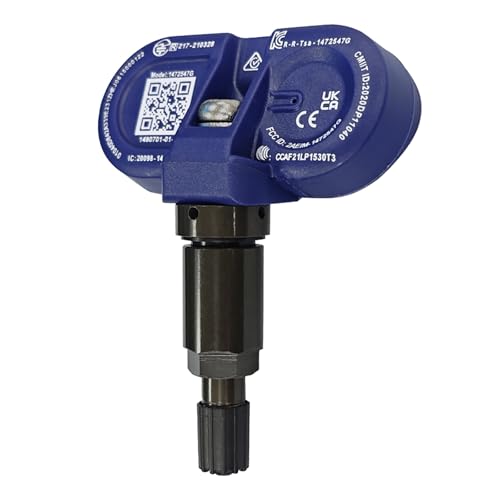
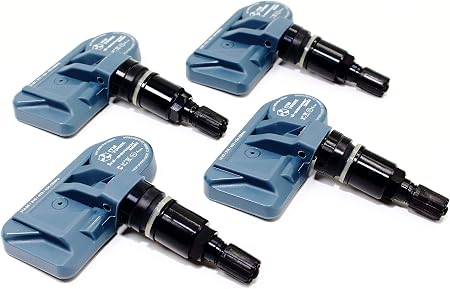
ITM 08017DXS TPMS 433mhz Tire Pressure Sensors
$109.99 price checked August 2026
Many regions require different frequencies, so find the best 315MHz and 433MHz dual frequency sensors.
How does the seller affect your warranty claim?
The source of your purchase determines who manages the claim and how quickly it is processed. Buying directly from the manufacturer often provides the most straightforward path to a replacement, as the manufacturer maintains the direct relationship with the hardware source.
Purchasing from an authorised retailer generally maintains the standard manufacturer’s warranty, provided the retailer can provide a valid proof of purchase. In these cases, the retailer may act as a middleman, either facilitating the return to the manufacturer or handling a replacement from their own stock.
Marketplace sellers, such as those on third-party platforms, present a higher risk because the seller may not be the actual manufacturer or an authorised distributor. If the seller is a small private entity, they may lack the stock to replace a faulty unit, and the manufacturer may refuse to honour a warranty for a product sold outside their official distribution network.
Refurbished or open-box sellers typically offer a much shorter, seller-specific warranty rather than a manufacturer’s guarantee. These units are often sold “as-is” regarding the battery life of the sensor, and a claim on a refurbished unit is often limited to a very short window, such as 30 to 90 days.
Grey-market sellers provide products imported from other regions where the manufacturer does not have a legal presence. These products may lack the necessary regional certifications and often carry no valid warranty in your local market, as the manufacturer cannot provide support or replacements for units sold outside of their designated territories.
If hardware sensors aren’t your preferred route, view tire pressure sensor alternatives for different monitoring methods.
What actions void a tire pressure sensor warranty?
Specific actions involving the physical handling or installation of the sensor will void the coverage. Because these sensors are precision instruments, any deviation from standard installation procedures is often cited as a reason to deny a claim.
Physical impacts and environmental damage
Any visible crack in the sensor housing or evidence of a heavy impact that could have compromised the internal seals will void the warranty. If the sensor is exposed to salt water or chemicals that exceed the IPX rating of the device, the resulting corrosion is usually considered a maintenance issue rather than a manufacturing defect.
Incorrect installation and torque
If a sensor is installed with incorrect torque, it can lead to a loose fit or a stripped thread. Manufacturers often check for signs of over-tightening or cross-threading during the inspection of a returned unit; if these are present, the claim is typically rejected as an installation error.
Incompatible frequency usage
Using a sensor on a vehicle that requires a different frequency, such as installing a 315MHz sensor on a 433MHz system, is not a warranty issue but a selection error. If the sensor is “not found” by the vehicle because of a frequency mismatch, the manufacturer will not replace the unit because it was never compatible with that specific vehicle.
What should you do before buying to ensure a claim works?
Taking specific steps before you purchase and install a sensor ensures that you have the necessary documentation and technical data to support a future claim. You should confirm the technical requirements of your vehicle before the purchase is finalised.
- Confirm your vehicle’s operating frequency (315MHz or 433MHz)
- Verify the specific communication protocol (e.g., BLE vs. standard RF)
- Retain the original proof of purchase from the seller
- Take a photo of the sensor’s serial number before installation
- Confirm the manufacturer’s specific warranty duration in writing
When is an extended warranty worth it?
An extended warranty is worth the cost if you are purchasing a high-volume set of sensors for a fleet or a commercial vehicle where downtime is costly. For a standard passenger vehicle, an extended warranty is usually not worth the investment because the cost of the warranty often exceeds the price of a single replacement sensor. If you are concerned about long-term reliability, you should prioritize a product with a longer standard manufacturer’s warranty over a third-party extended plan.